Introduction
A house format for Commander. Every round, the table votes on a Policy: a real Magic card from a shared Policy deck that changes the rules for everyone. Commander is already a political game; this makes the politics official.
How it started: I found Wheel of Misfortune and loved how much it shakes up a game, but it wasn't worth a deck slot if it takes dozens of games to draw it once. This format is the result: a deck full of cards like it, and one comes up every round!
📜 = optional variant (changes how you play) · ✨ = flavor (just for fun, changes nothing) · 💡 = hint (why a rule is the way it is) · ℹ️ = patched card (see Patches)
Status: rules v1.0
Quick start
-
You need: a normal Commander game and a Policy deck of about 25 cards (an example deck is listed below: My Example Policy Deck: MISFORTUNE AHEAD!?).
-
Every round: the Mayor reveals a Policy → the table talks about it → everyone votes yes or no at the same time → if yes wins, the Policy applies to everyone for this round.
-
The Mayor changes every round, one seat to the left.
That's all you need to start. The next section gives the rules in detail. Everything after it answers questions that might come up and presents some ideas to make it even more fun.
Rules
Setup
-
Shuffle the Policy deck and put it face down in front of the starting player, who becomes the first Mayor. The deck belongs to no player.
-
Deck size: about 20–30 Policies; for 4 players, 25 works well (see Deck size). If the deck runs out during a game, shuffle the Policy discard pile into a new deck.
-
Singleton: like a Commander deck, the Policy deck has only one copy of each card. Tips for picking them: Choosing Policies.
-
Everything else is normal Commander.
Each round
-
Reveal. At the start of each round (before the starting player's untap step), the Mayor reveals the top Policy.
-
✨ Grand Arbiter. On Ravnica, the Azorius Senate is led by a Grand Arbiter. While you are Mayor, you choose your own title, and everyone at the table is bound to use it or be shamed: Grand Arbiter a name the number or descriptor (e.g. Grand Arbiter Cooper the Wheel-Spinner). They better pay you the respect this high office demands!
-
Discuss. The table can talk about the Policy: what it would do, who it helps, who it hurts. Promises are allowed, but nobody is bound by what they say.
-
✨ Proclamation. The Mayor may rise and read the Policy aloud to the assembly, in their most aristocratic voice.
-
Vote. Every player votes yes or no at the same time, in whatever way your table likes. (The most fun way: ballot cards, see right below.)
-
✨ Ballot cards. Everyone brings their own voting cards: one Yes card and one No card. Any real Magic card works if its name, rules text or flavor text contains a yes word (like approve) or a no word (like veto), e.g. Stamp of Approval and Dovin's Veto. Only words from a fixed list count; the list, the exact rules and links to find ballots on Scryfall are in Ballot cards: which cards count To vote, flip one face up on a count of three.
-
Result. The Mayor counts the votes.
-
Majority yes: the Policy is enacted.
-
Majority no: the Policy goes to the Policy discard pile, and no Policy is active this round.
-
Tie: one player decides alone, chosen in this order:
-
the player with the fewest permanents (lands and tokens included);
-
among them, the player with the lowest life total;
-
among them, the player who has taken the most commander damage (in total);
-
still tied: the Policy is enacted.
-
✨ Motion carried! When a Policy is enacted, the Mayor announces it like a true parliamentarian: "Motion carried!" (or, when it's voted down, "Motion denied!"). Banging the table like a gavel is optional but encouraged.
-
Duration. An enacted Policy is active for this round only. At the start of the next round it goes to the Policy discard pile and the next Policy is revealed. If the new one is voted down, nothing is active; the old one does not stay.
-
New Mayor. At the end of the round, the Mayor passes the Policy deck to the player on their left, who is Mayor for the next round.
No one acts during the vote. Steps 1–4 happen before anyone gets priority, like the untap step: nobody can cast spells or activate abilities while the Policy is revealed, discussed and voted on.
Then the Policy resolves, and normal Magic takes over. An enacted one-shot Policy resolves right away, like a sorcery cast by a "virtual player". Nobody can respond to the Policy itself (it can't be countered). A lasting Policy simply starts to apply. Everything the Policy causes then works like normal Magic: triggered abilities (e.g. "when this creature dies" after a board wipe) go on the stack, players get priority, and everyone can respond with instants and abilities as usual.
-
The Mayor goes first. For everything a Policy causes, the Mayor counts as the active player: choices (including "starting with you") are made in turn order starting with the Mayor, and the Mayor's triggers resolve last. Details: Order: the Mayor goes first.
How a Policy works
-
No controller. A Policy is not cast and is no player's card. It can't be countered, copied, destroyed or stolen.
-
"You" and "your" mean every player: each player gets the effect for themselves, as if every player had cast the card at the same moment. Example: "You draw two cards" means every player draws two.
-
"Each player", "all creatures", "whenever a player …" already cover everyone, so they apply only once, exactly as written (not once per player). Example: "Each player draws two cards" means every player draws two, not eight.
-
Split effects for you and opponents: every player counts as both, and the effect happens once. Example and reasoning: Cards with split effects for you and opponents.
-
Targets: where the card says "target …" or "choose an opponent", each player makes that choice for their own copy of the effect.
-
Protection: hexproof, ward and similar abilities work against Policies that target something. Details: Hexproof, ward and protection.
-
One-shot Policies (sorcery-like) happen once, right after the vote. Lasting Policies (enchantment- or artifact-like) apply from the vote until the end of the round.
-
"Until end of turn" means until the end of the round. The same goes for "this turn": a Policy's effects always last until the next Policy is revealed.
-
Board changes stay. If a Policy destroys, moves or swaps permanents, that's permanent. Only the Policy's own rule ends with the round.
-
Not a spell, not a permanent. A Policy isn't cast, so "whenever a player casts" abilities don't trigger and it doesn't count for storm. A lasting Policy isn't on the battlefield, so it doesn't count as an enchantment or artifact for other cards. For rule interactions (layers), its timestamp is the moment it's enacted.
-
No controller for damage either. Damage and life loss from a Policy come from a source nobody controls, so effects about "sources you control" or "sources your opponents control" don't apply to it. Effects about "any source" or "all damage" do.
-
Spells cast because of a Policy (e.g. with Wild Evocation or Knowledge Pool) are cast by that player as normal: they trigger "whenever you cast" abilities and count for storm.
-
Disagreement: if players disagree on how to apply a Policy, do the obvious: hold another vote! on how to read it.
-
Going around faster: when a Policy has each player do something with their neighbour one after another (e.g. Game of Chaos), pairs that don't share a player may play at the same time. With 4 players: the Mayor and the next player play while the other two play, then everyone moves one seat on.
-
ℹ️ Patches: some cards have a short patch printed under their image below. It explains how that card works as a Policy and wins over these rules (see Patches). Treat them as examples of where the general rules reach their limit: for the Policy deck YOU build, make your own rulings wherever these rules stand in the way of fun!
Variants
All optional. Mix and match what your table likes.
-
📜 Anonymous vote. Before each vote, shuffle all Yes ballots into one pile and all No ballots into another, and deal each player one of each face down; look only at your own. To vote, everyone puts one ballot face down; the Mayor shuffles and reveals them. Nobody knows who voted how, so promises get even more interesting. Without ballot cards, use any two markers per player that look the same from the back (but who would play without them? Picking them is way too much fun!).
-
📜 Lobbying. When you vote, you may tap untapped lands; each one adds one extra vote the same way you voted. In round N you may tap up to half of N, rounded down: round 1 none, rounds 2–3 one land, rounds 4–5 two, rounds 6–7 three, and so on (if you forget the round number, it is the number of Policies in the discard pile + 1). Tapped lands stay tapped until the end of the round: they don't untap, and nothing can untap them. Pushing a Policy hard costs you mana for a whole round.
-
💡 Why lands, a cap and the whole round: every deck has lands, while creatures would give token decks dozens of votes. The cap grows slowly, so ramp decks can't turn their extra lands into extra votes, and everyone keeps enough mana to play their turn. Tapped for the whole round, because otherwise the price would depend on your seat: the starting player's lands would untap right after the vote, while the last player's would miss their whole turn. "Nothing can untap them" also shuts out untap tricks.
-
📜 Policy slots. Lasting Policies stay until replaced or voted out (e.g. 1–3 slots, with a vote on which one goes).
-
💡 Just an idea: there are no solid rules for this yet, and its consequences haven't been thought through.
Details and rulings
Ballot cards: which cards count
Any real Magic card can be a ballot (format legality doesn't matter; ballots are never played). What makes a card a Yes or a No is a fixed list of words in its name, rules text or flavor text:
| Yes words | No words |
|---|
| Yes, Yea, Yeah, Aye | No, Na, Nah, Nay |
| Accept, Grant, Favor, Approve, Allow | Reject, Refuse, Against, Oppose, Disallow |
| Assent, Concur, Affirmative | Dissent, Demur, Negative |
| Agree, Permit, Ratify | Disagree, Forbid, Veto |
-
Word forms count (accepts, refused, favored, favorable, forbidden), British spellings too (favour).
-
Exception: favorite doesn't count.
-
"Yes" and "No" count only as a statement ("No, I'm not kidding.", Yes Man), not as a description ("no cards in hand", "no one"). In practice, "Yes" always counts; only "No" is often a description.
-
💡 Why only as a statement: "no" is one of the most common words in Magic text ("no counters", "no one"). Counted everywhere, it would make about 2,400 cards No ballots and only about 400 Yes ballots. As a statement only, both piles are about the same size: roughly 460 Yes cards and 475 No cards, about 3% of all Magic cards, so finding your favourite ballot is a small treasure hunt. Examples: Big Winner (flavor: "The results of the test of strength were: Yes."), Divine Favor, Stamp of Approval, Dovin's Veto, We Say Thee Nay!. (Side note: sometimes the result is unintuitive, e.g. Fall from Favor is a Yes ballot 😅. If your table wants to stray from the rules for a ballot card, just hold a vote!)
-
A card with both a Yes word and a No word is not a ballot.
-
What counts is the English text of your copy's printing (flavor text differs between printings; for a non-English copy, look up the English version of the same printing). Your table may agree to handle this differently.
-
Sleeves: ballots should be in matching sleeves, so they look the same face down. If you bring the Policy deck to a game, bring 2 sleeves per player in one colour; then every voting variant works.
-
🔎 Find ballots on Scryfall: all Yes ballots · all No ballots. These searches are a helper, not the rule: they follow the rules above as closely as Scryfall allows (it limits how complex a search can be), so a few cards may be missing or listed by mistake (about 470 Yes and 515 No results). Check your actual card against the rules. Scryfall shows one printing per card; if the word is in the flavor text, click through to all printings to find the one that has it.
Order: the Mayor goes first
The official rule (APNAP). Magic already settles what happens when several players act at the same time. "APNAP" stands for Active Player, Non-Active Player:
-
Simultaneous choices (CR 101.4): the active player makes their choices first, then each other player in turn order.
-
Simultaneous triggered abilities (CR 603.3b): the active player puts their triggers on the stack first (in any order they like), then each other player in turn order. The stack resolves last-in-first-out, so the active player's triggers resolve last.
-
Official Comprehensive Rules: magic.wizards.com/en/rules.
Our ruling on top. Policies always resolve at the start of the round, before the starting player's turn, so under the normal rule the same or no player would always be "active". Therefore for everything a Policy causes, the Mayor counts as the active player:
-
Choices a Policy asks for (picking a number, choosing creatures, searching libraries…) are made in turn order starting with the Mayor.
-
Triggered abilities caused by a Policy (e.g. "when this creature dies" after a board wipe) go on the stack in turn order starting with the Mayor, so the Mayor's triggers resolve last.
-
Everything not caused by a Policy follows the normal rules, with the real active player.
-
Otherwise it's normal Magic. The stack, priority and triggers work exactly as usual, also around Policy effects: players can cast instants, activate abilities and respond to triggers (including triggers caused by a Policy) by the normal rules.
Since the Mayor role moves one seat each round, being first or last evens out over a game. We build on how Magic is meant to work and only change who counts as active for Policies.
Cards with split effects for you and opponents
Some cards give you one effect and your opponents another. As a Policy, every player counts as both "you" and an "opponent", and the effect happens once. Example: Mob Verdict deals damage to opponents for each vote they received, and you draw a card for each vote you received. As a Policy, every player who received votes takes the damage and draws the cards, once.
-
💡 Why this rule: a Policy should hit everyone equally and only once. Without this rule, every player would have their own copy of the effect, and effects aimed at opponents would happen several times. The rule may be broken when it would make a card work in a strange way for everyone; such cards get a patch instead (e.g. Tempt with Discovery).
Patches
Some cards read awkwardly under the general rules (e.g. "for each player, you choose …"). For those, a short patch is printed under the card image below. It's a reading aid for how the card works as a Policy and wins over the general rules where they disagree. When choosing your Policies, prefer cards that work without a patch.
Hexproof, ward and protection
-
When a Policy targets something, the target sees it as an opponent's. Normally a Policy has no controller (see How a Policy works). But when its text says "target", the target's own protective abilities treat the Policy as controlled by an opponent. Nothing else changes: the Policy still has no controller for any other card.
-
Works as usual: shroud, protection, "can't be the target of …", indestructible, regeneration and damage prevention protect against Policies just like against any other spell.
-
Hexproof protects. A hexproof permanent can't be targeted by a Policy. Example: with Illicit Auction, the table can't vote for a hexproof creature.
-
Ward and similar can be paid together. When a Policy targets a permanent with ward or a similar "counter it unless that player pays …" ability (e.g. Diffusion Sliver), any players may pay the cost together (pooling mana or life). If nobody pays, the Policy ignores that permanent; if it was the Policy's only target, the Policy does nothing.
-
"Counter it" abilities without a cost (e.g. Kira, Great Glass-Spinner): the Policy can't be countered, so it ignores that permanent instead.
-
Abilities that punish "that player" for targeting (e.g. Thunderbreak Regent deals 3 damage to that player): nobody is punished, because no single player controls the Policy.
-
Abilities that trigger on "a spell or ability you control" (e.g. valiant, Willbreaker) don't trigger: nobody controls the Policy.
-
💡 Why only for targeting: if the table controlled Policies completely, effects like "sources you control deal triple damage" (Fiery Emancipation) would boost Policies for some players, and Willbreaker would steal every creature a Policy targets. Limiting it to the target's protection gives hexproof and ward their meaning without side effects.
Choosing Policies
A good Policy:
-
affects every player, best case about equally strong for all potential deck types;
-
makes for an interesting vote: good for some players, bad for others, depending on the board state;
-
doesn't decide the game alone but shakes things up: even if it's super potent (e.g. a board wipe), it should move the game forward, not reset it fully.
Deck size
-
Game length: a 4-player Commander game lasts about 10 rounds on average; about 70% of games end between rounds 8 and 12 (source). Fewer players usually means a bit shorter (3 players: about 8–10), more players a bit longer (5–6 players: about 10–13). So one game reveals about 8–12 Policies.
-
Simulated with ~10 Policies revealed per game:
| Deck size | Chance a given Policy shows up in one game | …within 3 games | Games until you've seen all (average / 90%) |
|---|
| 15 | 67% | 96% | 3.6 / 5 |
| 20 | 50% | 88% | 5.8 / 8 |
| 25 | 40% | 78% | 8.2 / 11 |
| 30 | 33% | 70% | 10.5 / 15 |
| 40 | 25% | 58% | 15.5 / 21 |
-
Recommendation: 25 Policies (about 2.5× the Policies per game). Each game sees roughly 40% of the deck, so games feel different, and after 3 games you've seen about 4 in 5 of the Policies. Above 30, you'd need 15+ games to see everything.
Reasoning behind the rules
-
Tie-breakers (fewest permanents, then life, then commander damage): a catch-up rule. The player furthest behind decides, and the others can see it coming and play around it. Permanents first, because a small board is the most reliable sign of being behind; low life alone can be a choice (e.g. Vona pays life on purpose).
-
Why a rotating Mayor instead of random order: it keeps the official APNAP rule (see Order: the Mayor goes first) and only moves the "first seat" one player per round, which is fair over a game. Random order (dice each time) would cost time and still be unfair in any single round.
My Example Policy Deck: MISFORTUNE AHEAD!?
The Policy deck I'm building, as an example of what a Policy deck can look like.
Order below: the Main Deck first, then the Side Deck (Policies to swap in for variety), then the candidates still to review, and at the very bottom the rejected cards, kept for reference with the reason they were rejected.
ℹ️ Patch = how the card is read as a Policy
How I picked the Policies
-
Interaction over effect. I picked Policies that make players decide against each other: bids, votes, secret choices, trust, auctions, splitting piles. Plain symmetric effects (draw, discard, wheels) were nearly always too boring for me.
-
Fair to every deck type. I left out anything that hurts one archetype: creatures-only wipes, "can't gain life", Blood Moon, land destruction, no blocking.
-
Fair to every seat. I avoided cards where the last player in the round gets more (Eye of the Storm) or where the Mayor gets a lasting advantage (Court of Grace).
-
Refill and move forward. Resets are in when everyone gets something back (The Great Aurora); resets that just cost time (Upheaval, Hour of Revelation) are out.
-
Works within one round. Effects that only pay off over many turns, or only matter as a permanent rule (Mirror Gallery), make no sense here.
-
Few patches, no invented mechanics. No X costs; if a card needs a big patch, I picked a different one.
-
Mini-games welcome (Goblin Game, Game of Chaos, Prisoner's Dilemma), as long as they're quick and not a duel every single turn.
-
Not too slow. If a card only slows the game down, it's out.
Main Deck (25) ≈ €45.34
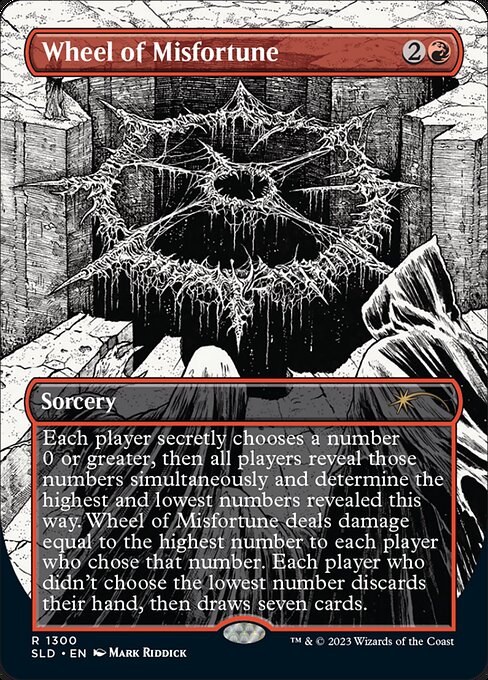
Wheel of Misfortune ≈ €8.40
Everyone bids secretly: the highest bidder takes the damage, the rest get a fresh hand. The card this format started with.
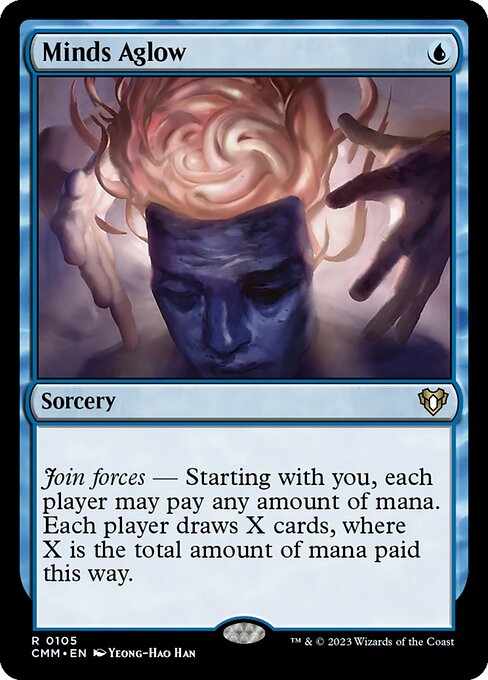
Minds Aglow ≈ €0.53
Join forces: everyone may pay mana, then everyone draws that total. Who chips in, who freeloads?
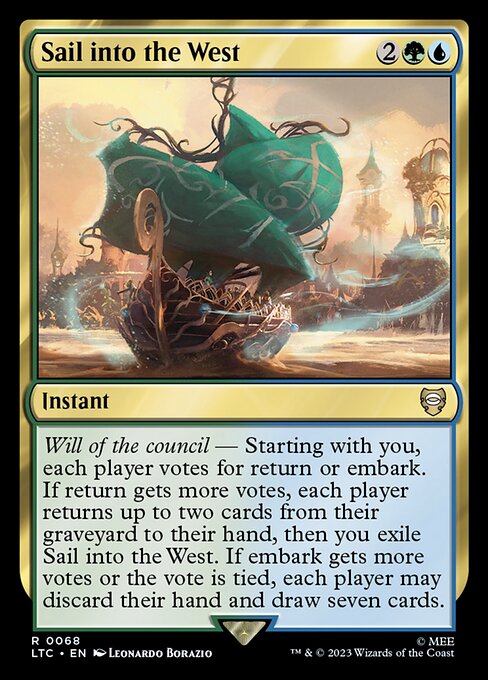
Sail into the West ≈ €0.28
A vote inside the vote: everyone gets two cards back from the graveyard, or everyone may draw a fresh seven.
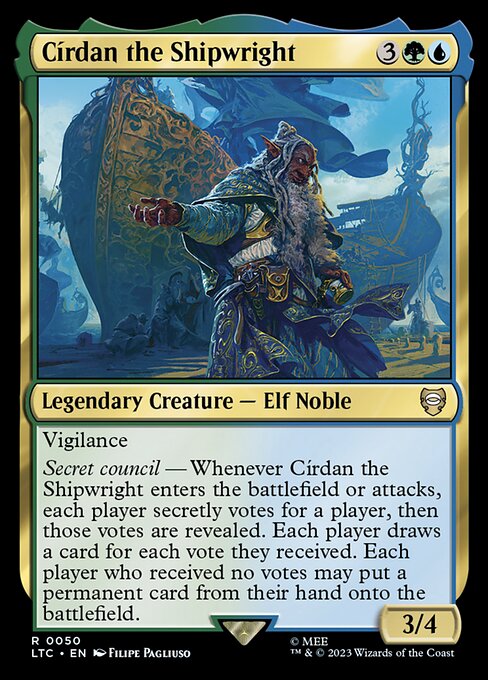
Círdan the Shipwright ≈ €0.48
ℹ️ Patch: Only the secret council ability; no creature is created.
Votes hand out cards; whoever gets none may drop a permanent for free. Help a friend or leave them out?
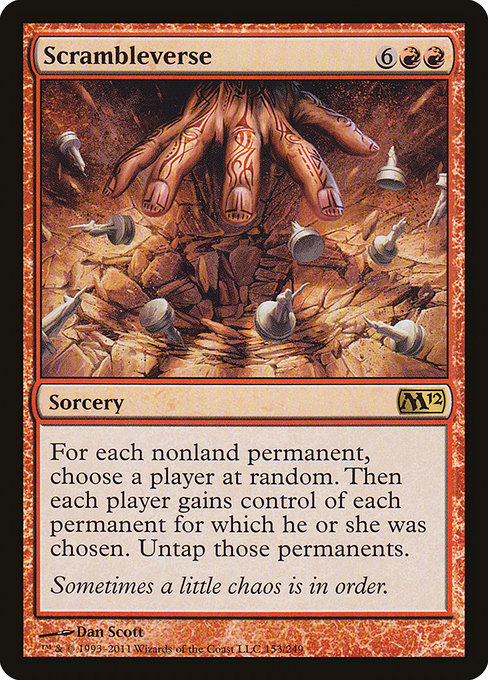
Scrambleverse ≈ €1.04
Every nonland permanent goes to a random player. Pure chaos.
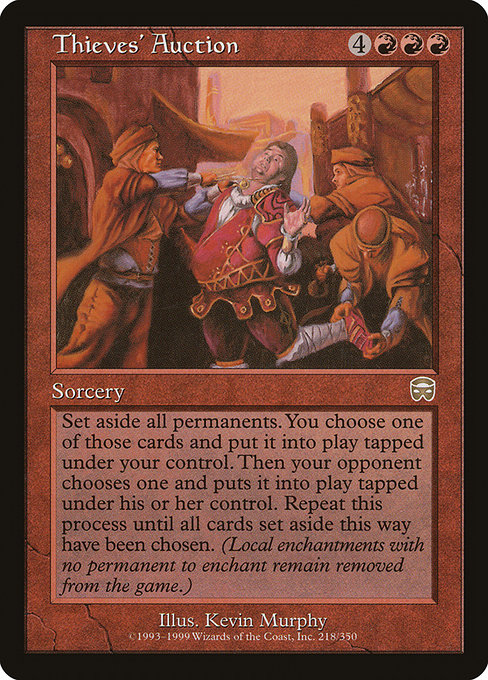
Thieves' Auction ≈ €1.92
Everything gets exiled, then players take turns picking. A draft in the middle of the game.
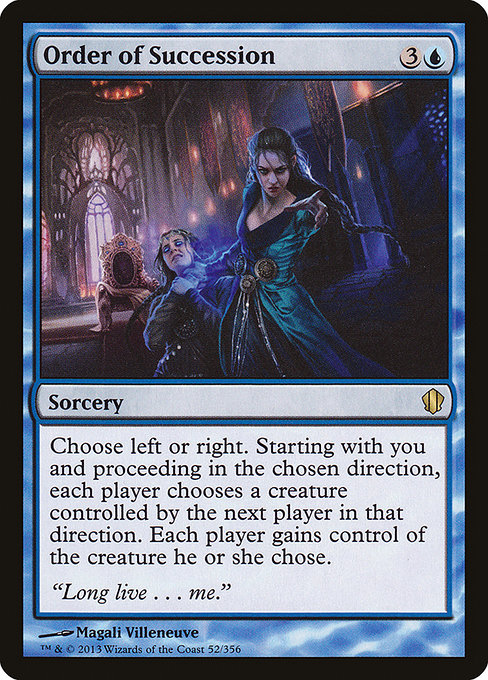
Order of Succession ≈ €0.48
ℹ️ Patch: The direction is voted on.
Everyone passes a creature to a neighbour. Neighbours suddenly matter.
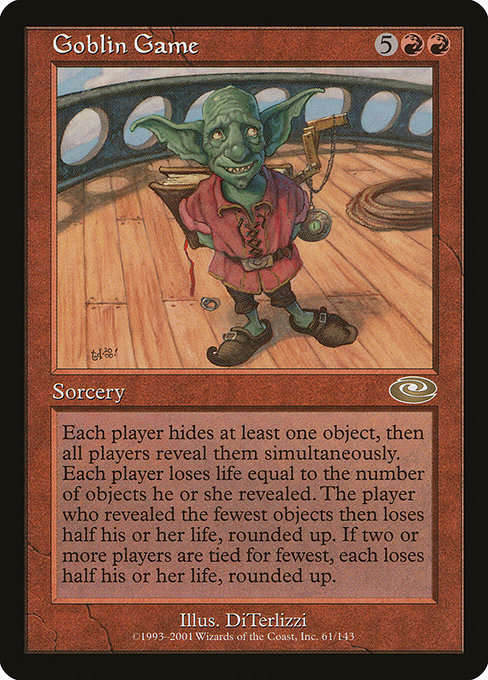
Goblin Game ≈ €0.33
Everyone hides objects, then loses life by the count. A silly mini-game.
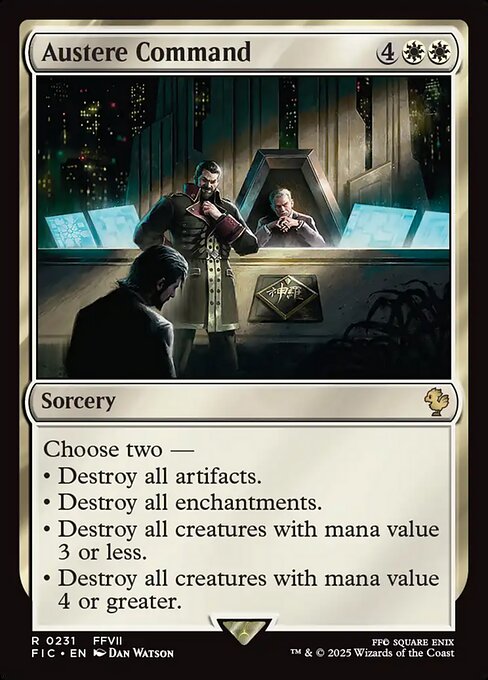
Austere Command ≈ €0.39
ℹ️ Patch: The two modes with the most votes are chosen.
The table votes on which permanents die.
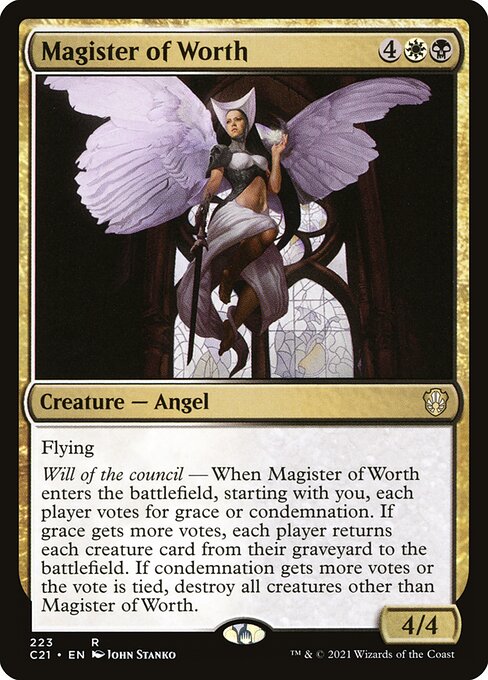
Magister of Worth ≈ €0.34
ℹ️ Patch: Only the enter-the-battlefield vote; no creature is created.
Bring back every dead creature, or destroy every living one. The table picks.
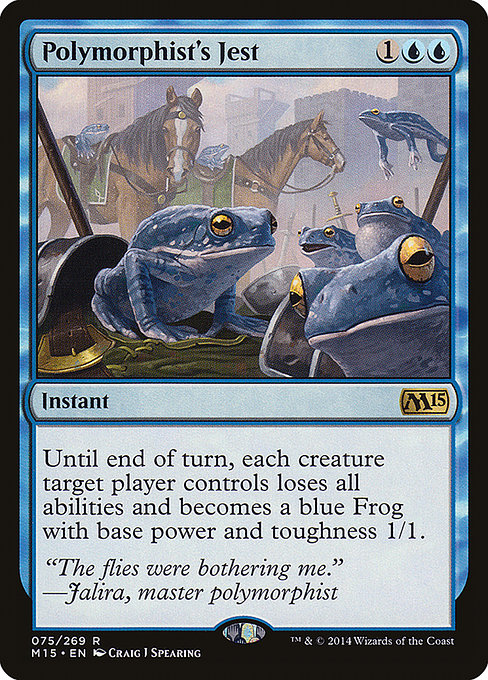
Polymorphist's Jest ≈ €4.48
ℹ️ Patch: Every player is the target once.
Every creature becomes a 1/1 Frog without abilities. The affordable stand-in for Humility.
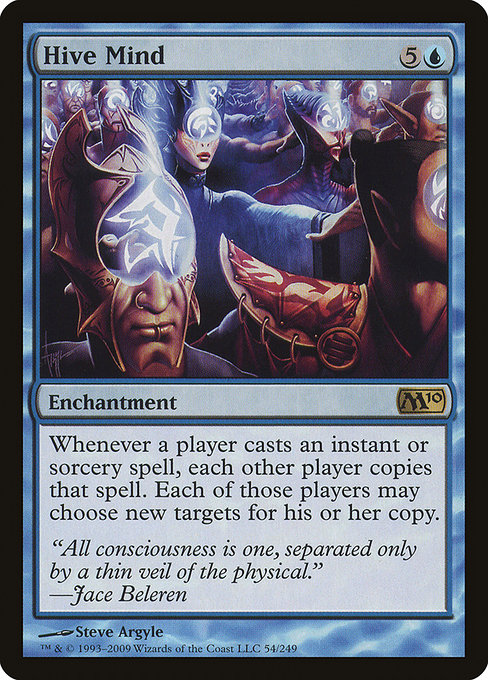
Hive Mind ≈ €2.74
Every instant or sorcery is copied for each other player.
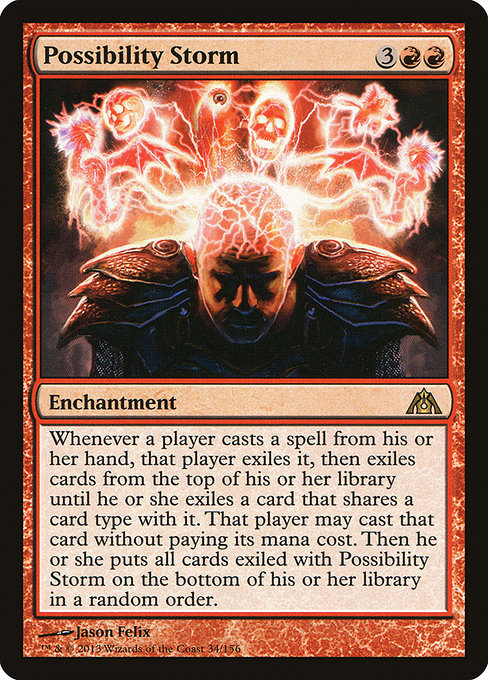
Possibility Storm ≈ €1.56
Every spell from hand is replaced by a random spell of the same type.
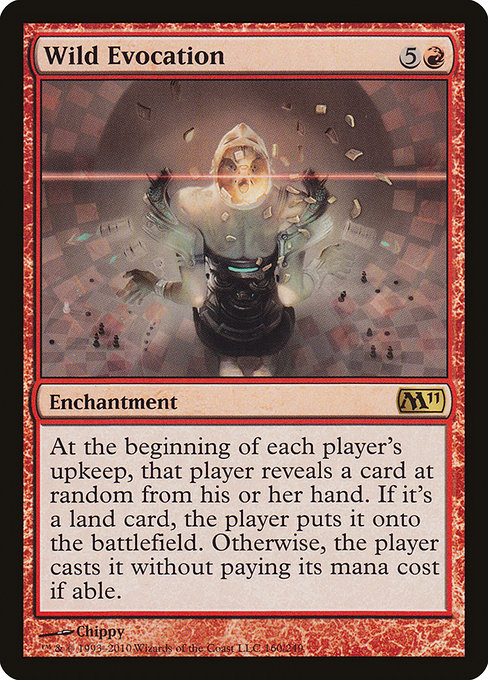
Wild Evocation ≈ €0.48
Each upkeep, a random card from your hand is cast for free.
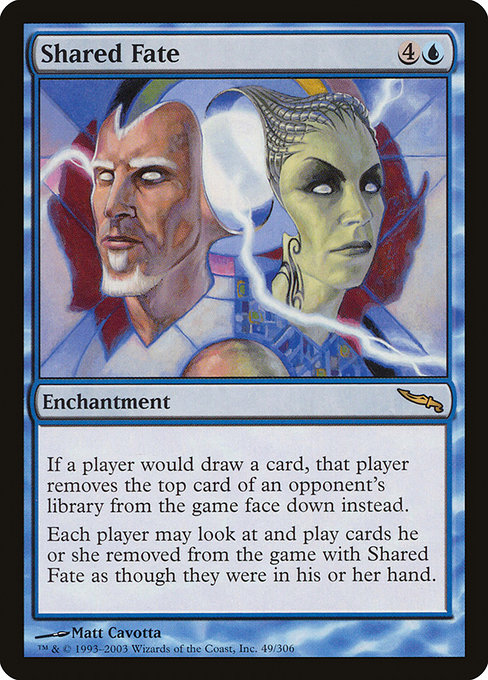
Shared Fate ≈ €0.27
ℹ️ Patch: Exiled cards stay playable for the player who exiled them, for the rest of the game.
Everyone draws from their opponents' libraries.
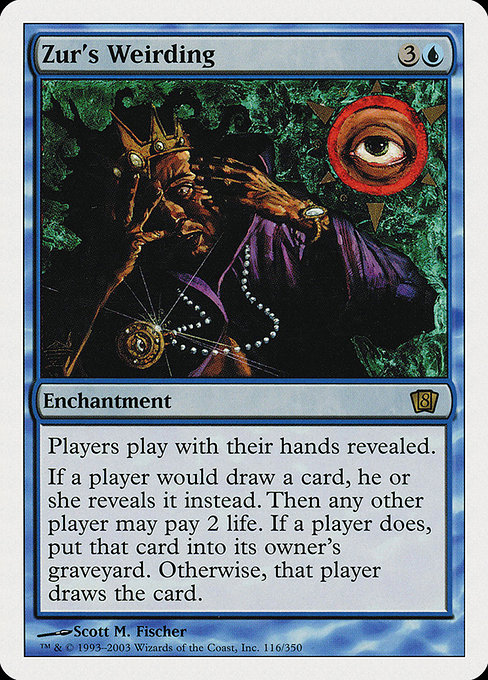
Zur's Weirding ≈ €0.45
Hands are revealed, and other players can pay life to deny your draws.
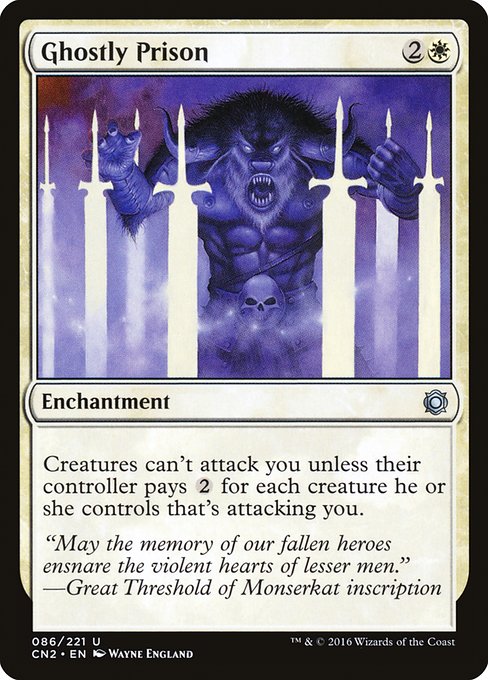
Ghostly Prison ≈ €4.18
ℹ️ Patch: Applies to attacks on any player.
Attacking costs {2} per creature for a round. A breather for players under pressure.
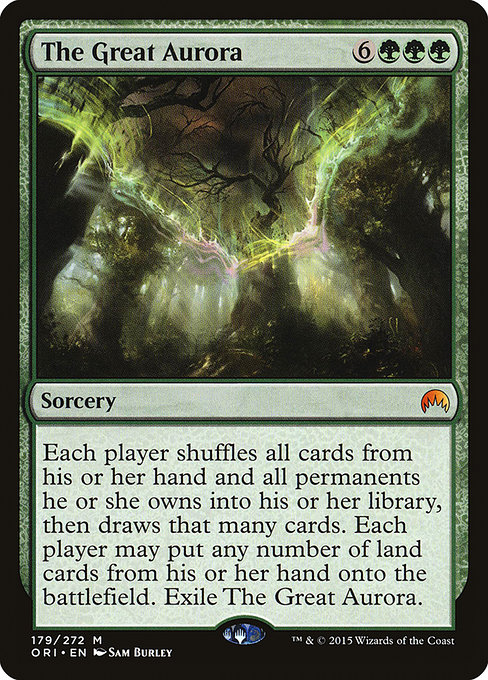
The Great Aurora ≈ €0.57
Everyone shuffles hand and permanents away, draws that many and may play lands from hand. Whoever had more keeps more. Ruling: only better if lands stayed.
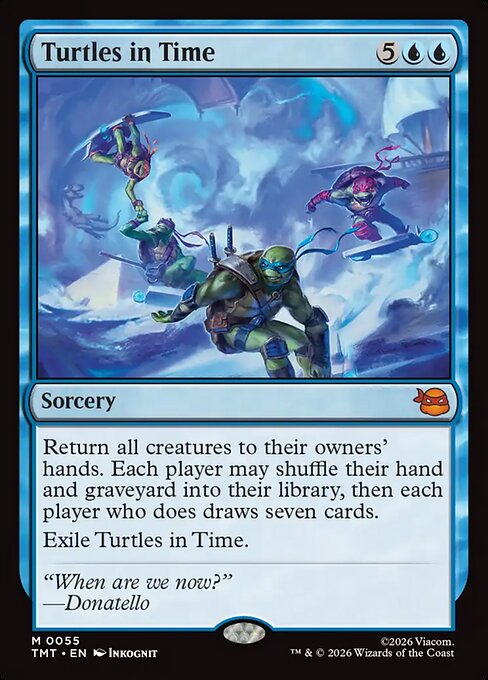
Turtles in Time ≈ €0.56
All creatures go back to hand, then everyone may draw a fresh seven. A reset where nothing dies.
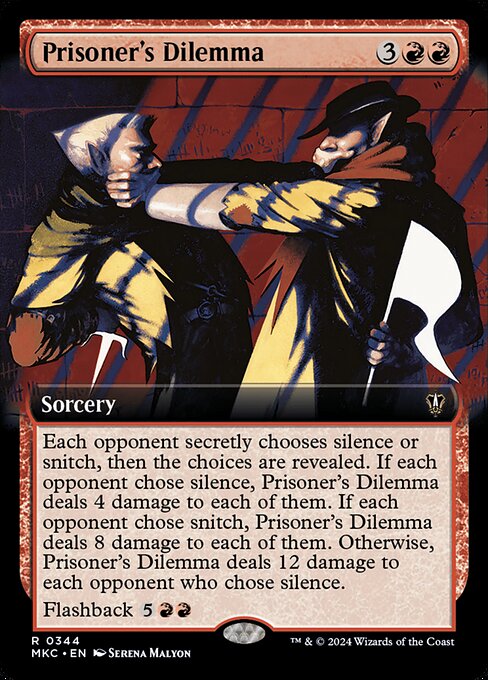
Prisoner's Dilemma ≈ €4.34
Secretly pick silence or snitch. All silent: 4 damage each. All snitch: 8. Mixed: the silent ones take 12. Do you trust the table?
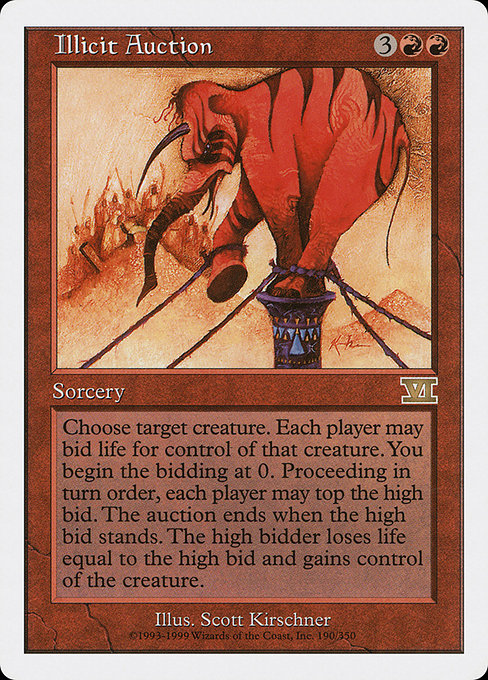
Illicit Auction ≈ €2.12
ℹ️ Patch: One auction: the table votes on the creature (usual tie-breakers); the Mayor opens at 0.
An open auction paid in life; the winner keeps the creature for good.
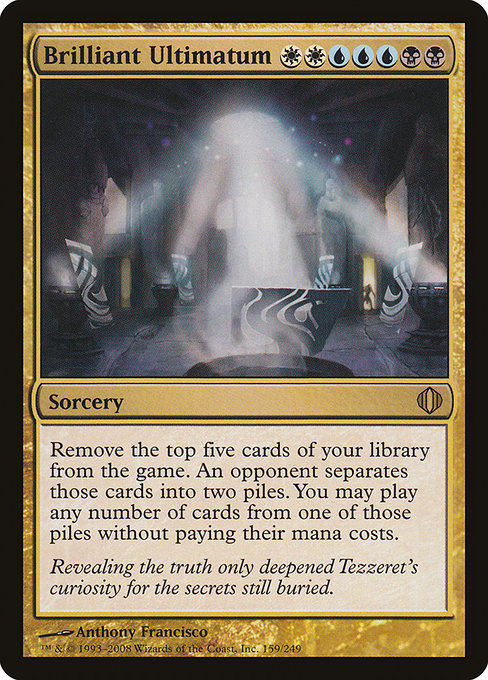
Brilliant Ultimatum ≈ €0.59
ℹ️ Patch: The player to your left separates your piles.
Your neighbour splits your top five into two face-up piles; you cast one pile for free. You split theirs.
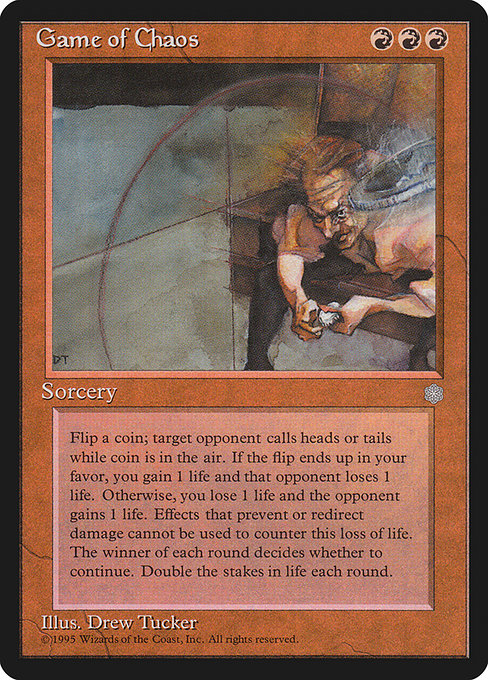
Game of Chaos ≈ €7.52
ℹ️ Patch: Each player plays one game against their left neighbour, starting with the Mayor.
Coin flips, double or nothing: whoever just won decides whether to flip again.
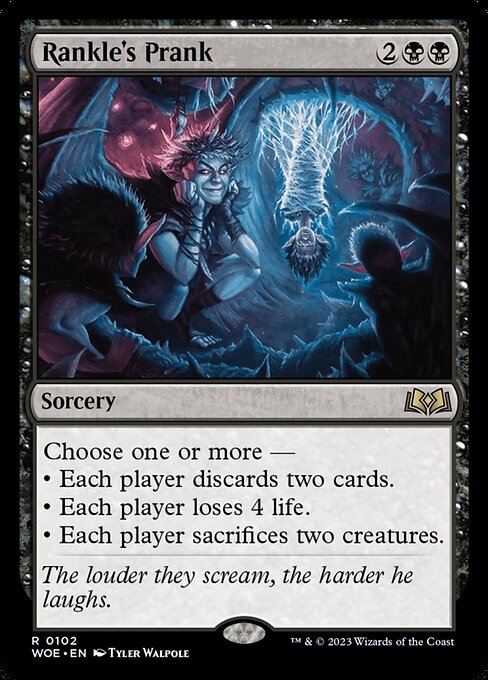
Rankle's Prank ≈ €0.43
ℹ️ Patch: The table votes on each mode separately; every mode with a yes majority is chosen.
A menu of pain: discard two, lose 4 life, sacrifice two creatures. Which hurts the leader most?
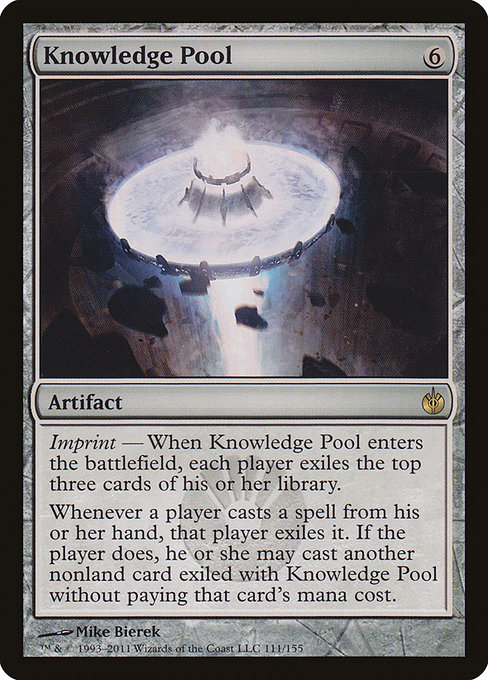
Knowledge Pool ≈ €0.86
ℹ️ Patch: Everyone exiles their top three into a shared, face-up pool. Only each player's first spell from hand this round goes in. At round end, leftovers go to the bottom of their owners' libraries.
Your spell goes into the pool, and you cast another pool card for free instead. Is what you take worth what you hand the next player?
Side Deck (28) ≈ €105.86 · ≈ €54.19 without Humility
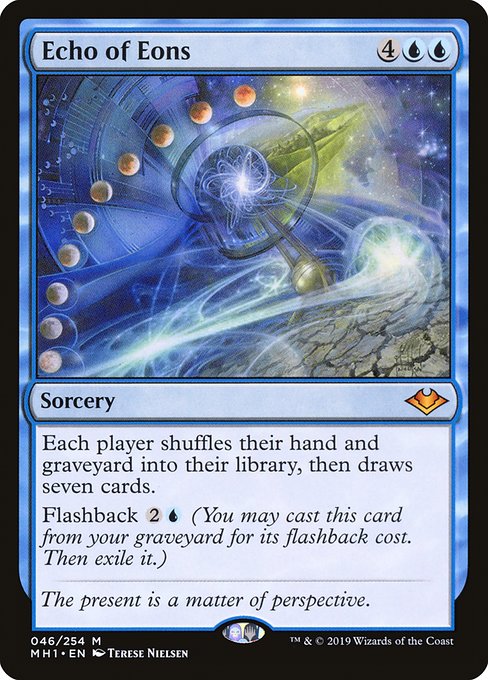
Echo of Eons ≈ €10.39
Everyone shuffles hand and graveyard back and draws seven. Resets hands, but keeps the board.
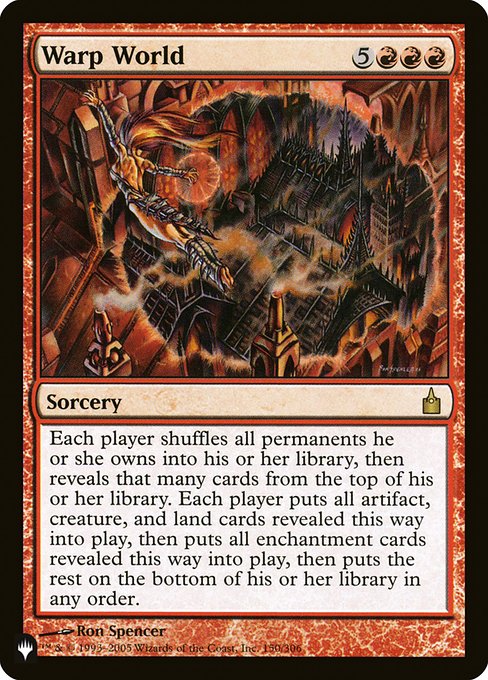
Warp World ≈ €0.36
Every permanent is shuffled away and replaced at random. Ruling: weaker for decks with few permanents.

Living Death ≈ €3.57
Graveyards and battlefields swap creatures. Great when lots of creatures have died.
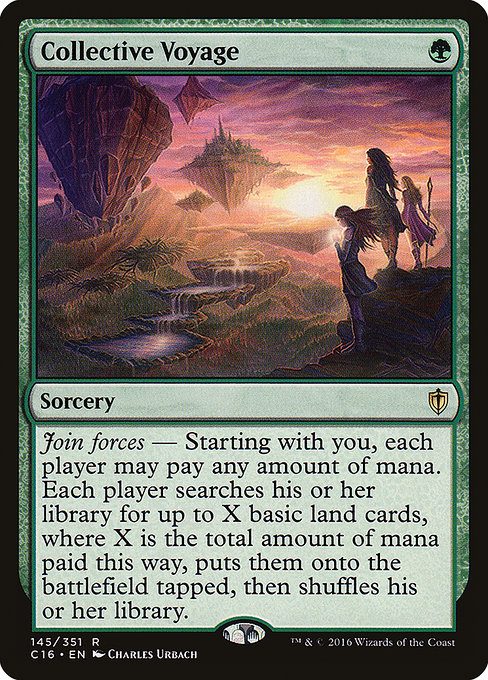
Collective Voyage ≈ €4.21
Join forces: everyone may pay mana, then everyone ramps that many lands.
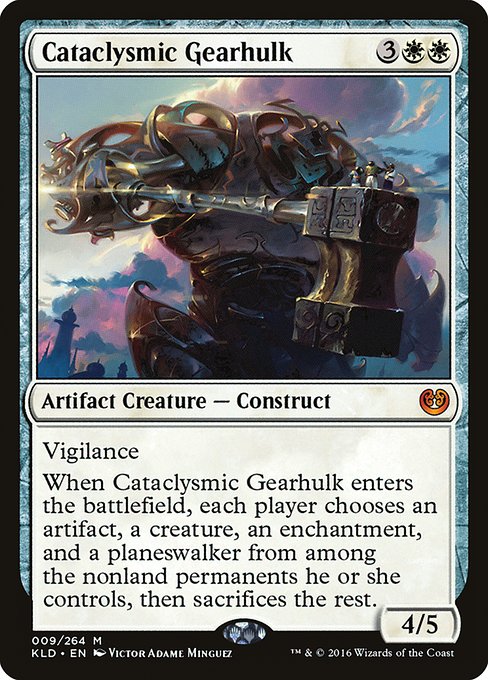
Cataclysmic Gearhulk ≈ €0.23
ℹ️ Patch: Only the enter-the-battlefield effect; no creature is created.
Everyone keeps one artifact, creature, enchantment and planeswalker. Ruling: not too exciting, but choices are nice.
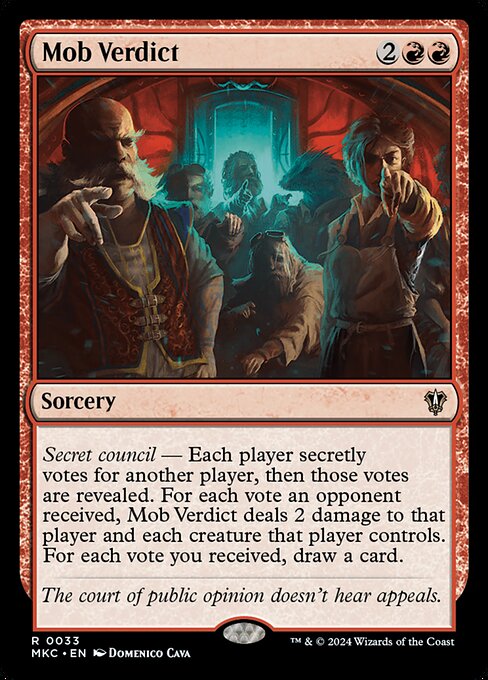
Mob Verdict ≈ €0.41
The table decides together whom to punish, and the target gets cards as a consolation.
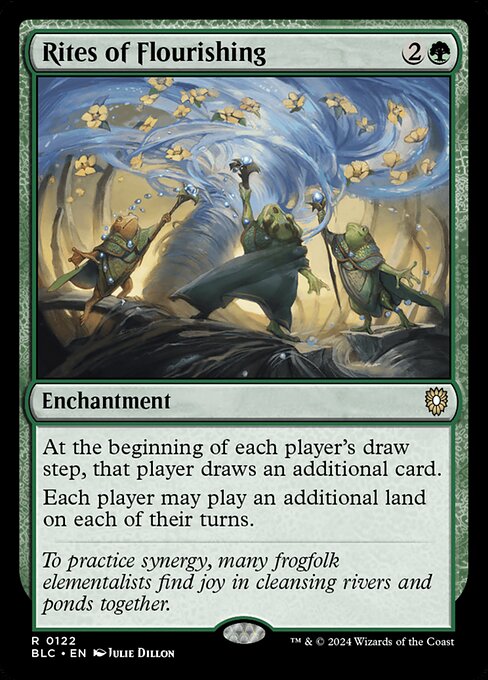
Rites of Flourishing ≈ €0.47
Everyone draws an extra card and may play an extra land.
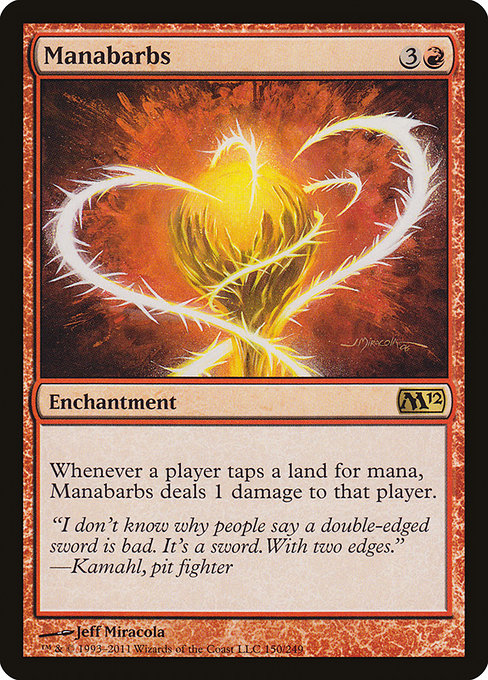
Manabarbs ≈ €2.80
Every land you tap deals 1 damage to you. Big turns cost life.
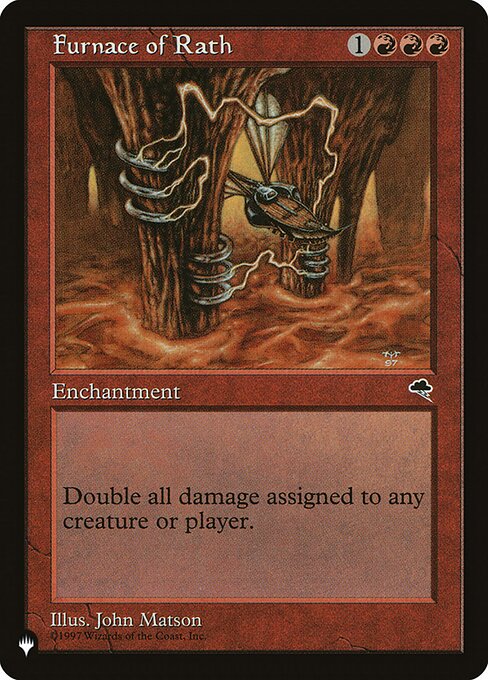
Furnace of Rath ≈ €2.34
All damage is doubled. Combat and burn get scary.
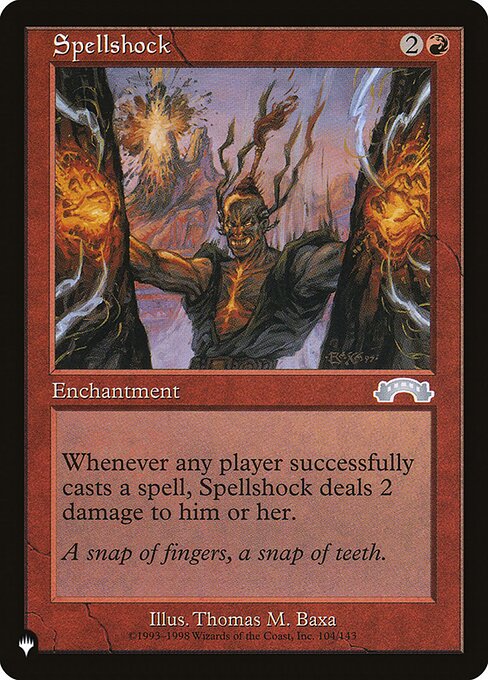
Spellshock ≈ €0.54
Every spell deals 2 to its caster. Punishes spell-heavy turns.
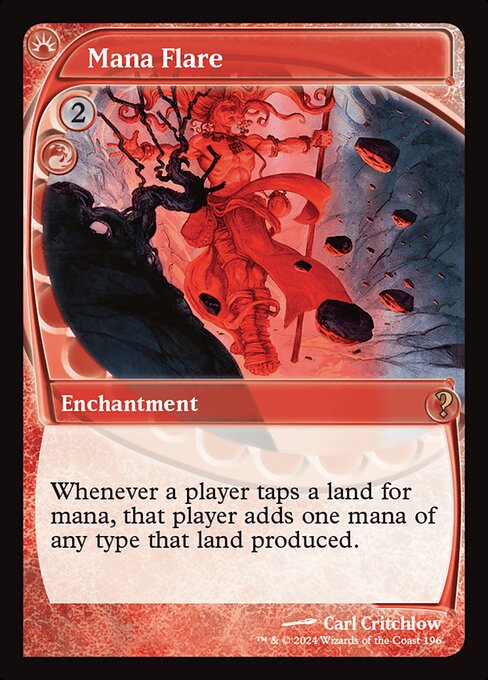
Mana Flare ≈ €0.35
Every land makes double mana. Huge turns for everyone.

Mass Hysteria ≈ €1.05
All creatures have haste. Everything can attack immediately.
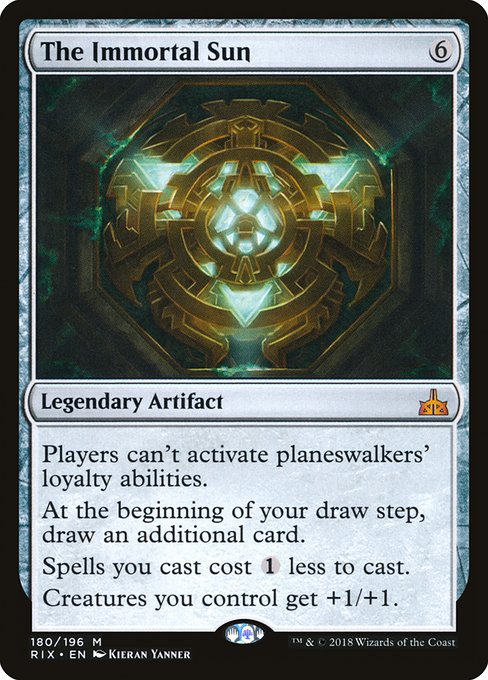
The Immortal Sun ≈ €9.95
ℹ️ Patch: For everyone: no loyalty abilities, an extra card each draw step, spells cost {1} less, creatures get +1/+1.
A big buff for all, except planeswalkers.
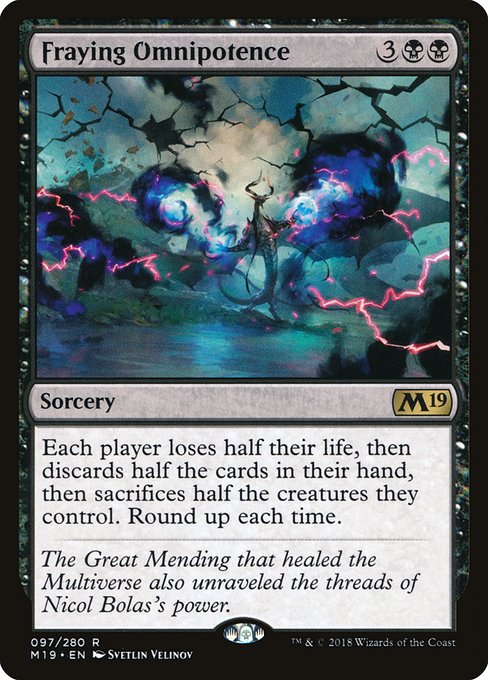
Fraying Omnipotence ≈ €0.57
Everyone loses half their life, hand and creatures. Ruling: hits creatures only, so side deck.
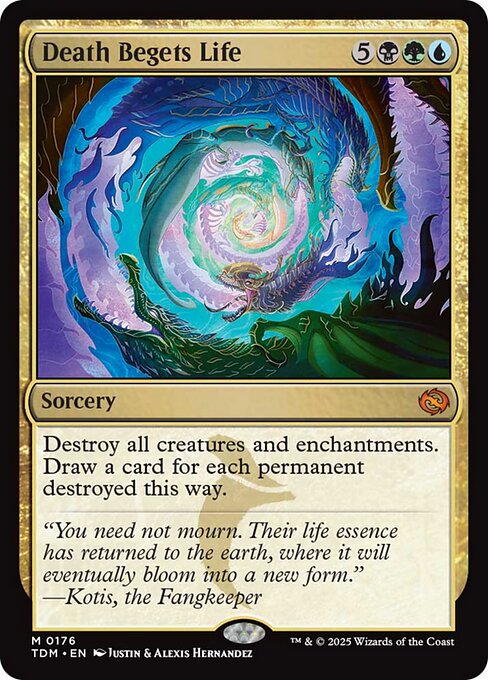
Death Begets Life ≈ €0.63
ℹ️ Patch: Each player draws a card for each of their own permanents destroyed.
Creatures and enchantments die; everyone draws for what they lost. Ruling: close to The Great Aurora, but less nice.
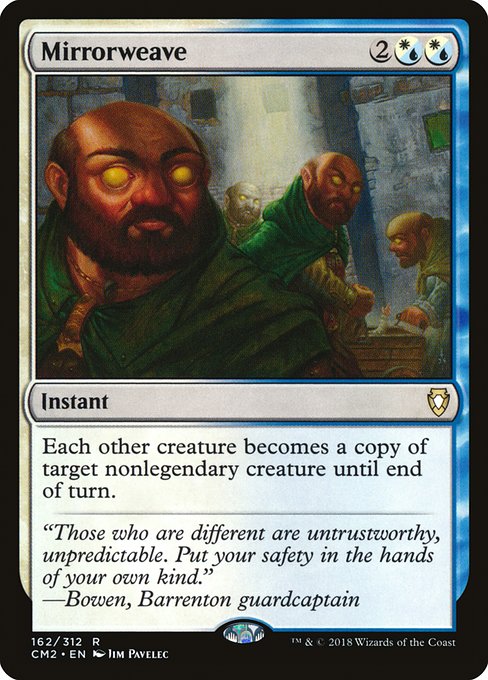
Mirrorweave ≈ €0.61
ℹ️ Patch: The table votes on the creature (nonlegendary).
Every creature becomes a copy of one: an army of the best, or a pile of the worst.
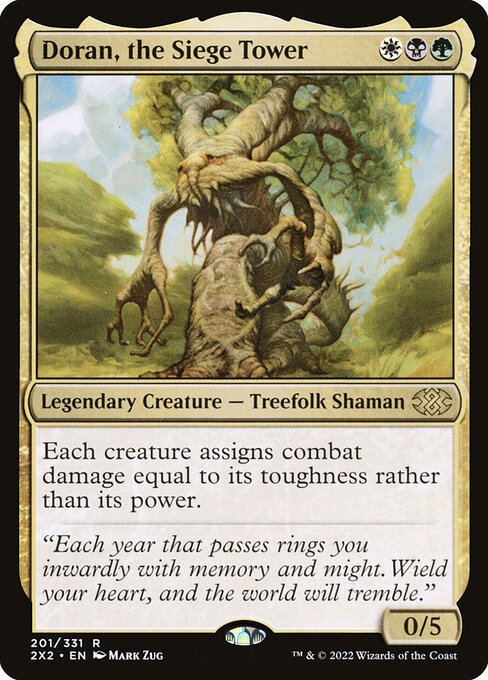
Doran, the Siege Tower ≈ €3.70
ℹ️ Patch: Only the rules text; no creature is created.
Combat damage equals toughness. Walls become killers.
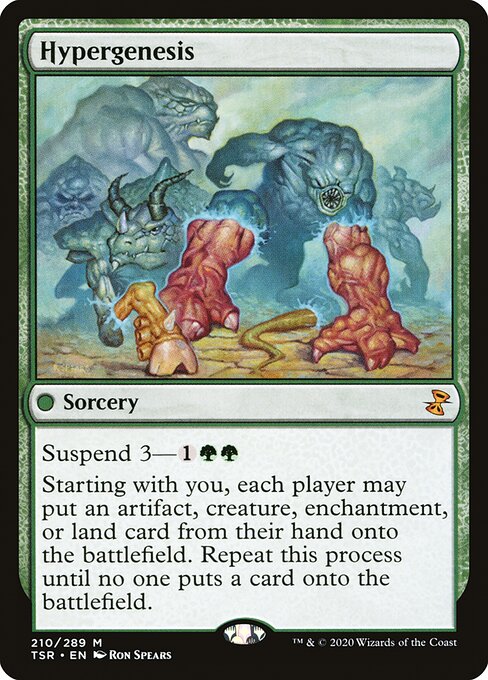
Hypergenesis ≈ €0.43
ℹ️ Patch: Resolves immediately (ignore suspend).
Starting with the Mayor, everyone may drop permanents from hand, round after round. Ruling: maybe not balanced enough.
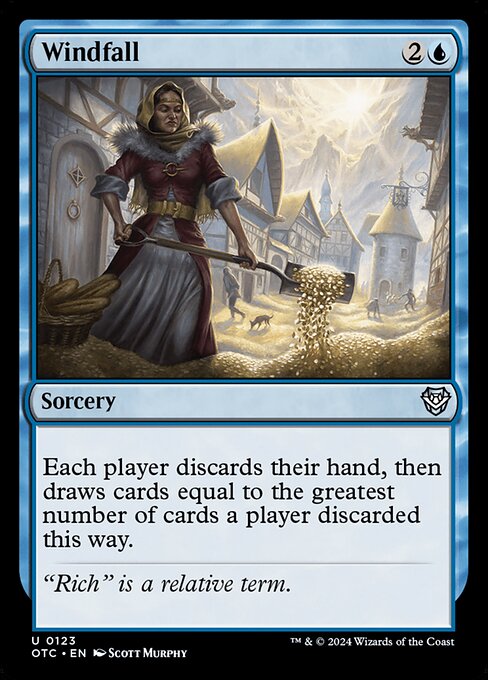
Windfall ≈ €3.75
New hands for everyone, sized by the biggest hand at the table.
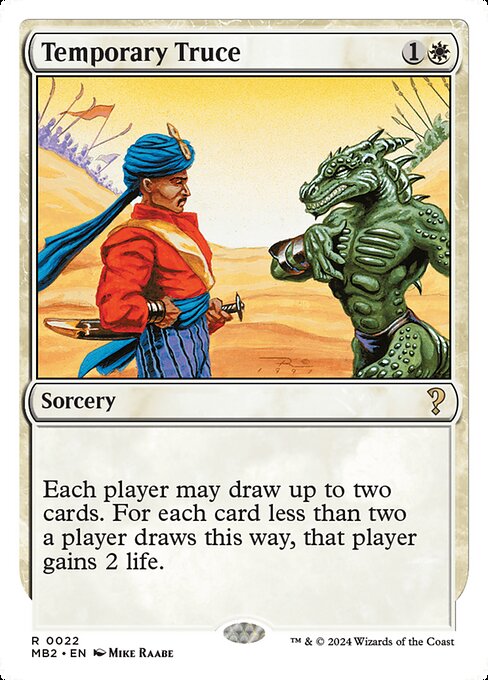
Temporary Truce ≈ €0.35
Everyone chooses: draw up to two or gain life instead.
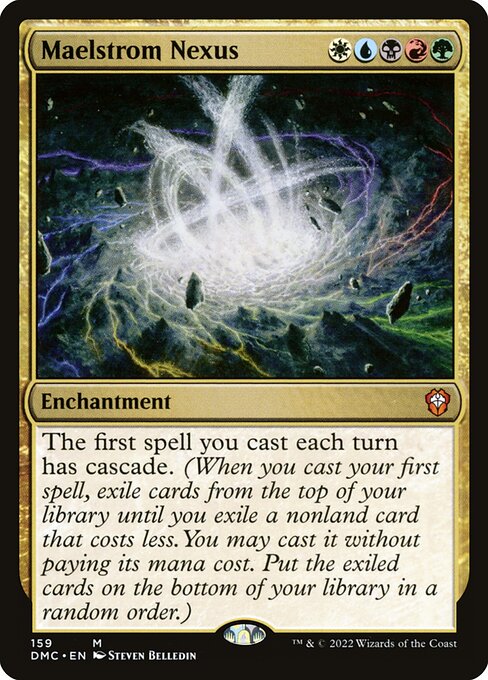
Maelstrom Nexus ≈ €0.45
Everyone's first spell each turn has cascade.
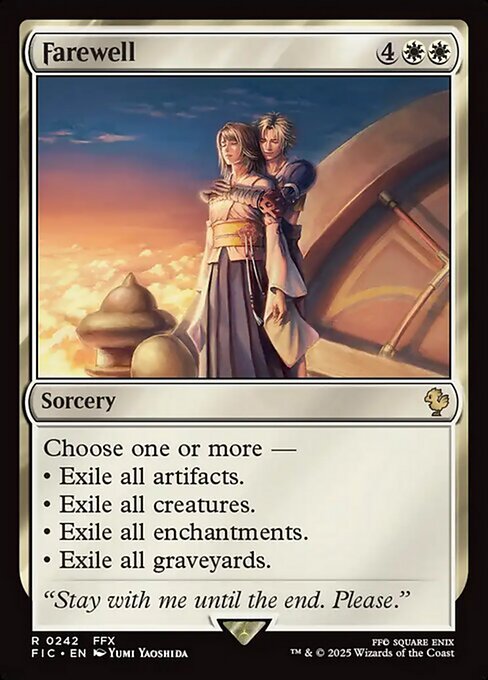
Farewell ≈ €3.95
ℹ️ Patch: The table votes on each mode separately; every mode with a yes majority is chosen.
Exile all artifacts, creatures, enchantments and/or graveyards. Ruling: too close to Austere Command for the main deck.
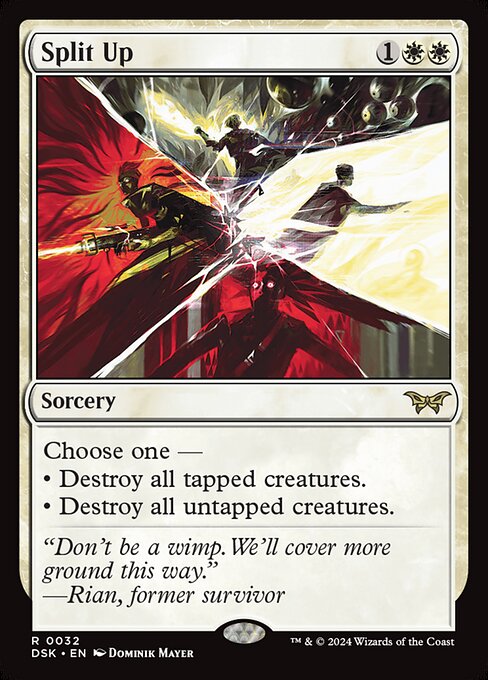
Split Up ≈ €0.97
ℹ️ Patch: The table votes on which mode is chosen.
Destroy all tapped or all untapped creatures. Who attacked last turn suddenly matters.
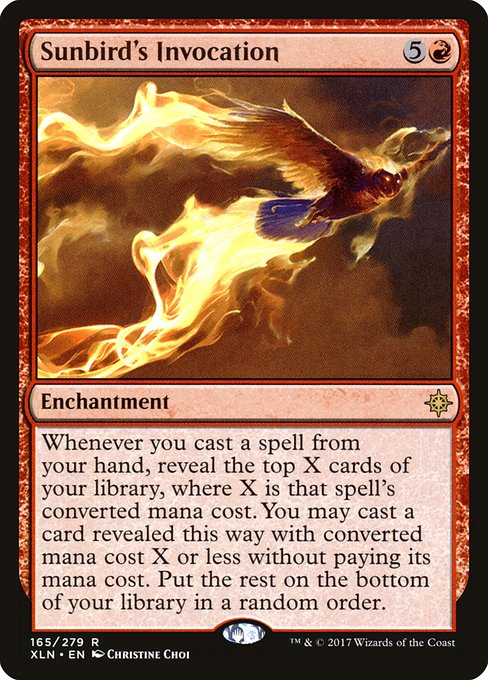
Sunbird's Invocation ≈ €0.37
Every spell from hand reveals that many cards; cast one of them for free. Every spell is a double spell.
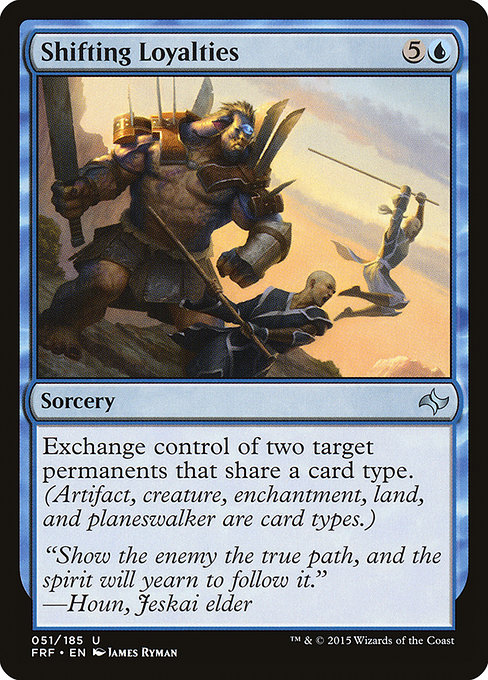
Shifting Loyalties ≈ €0.14
ℹ️ Patch: Starting with the Mayor, each player swaps one of their permanents for another player's of the same type.
A trading round. Who gets robbed twice?
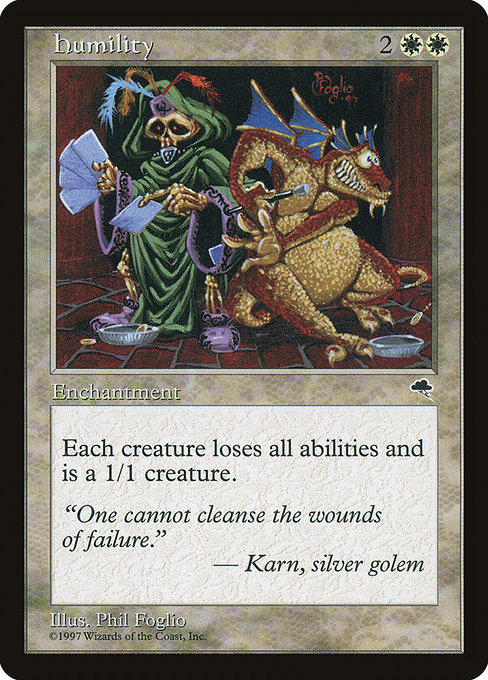
Humility ≈ €51.67
All creatures are 1/1 with no abilities. Ruling: the real card for this, but about €40; Polymorphist's Jest does it in the main deck.
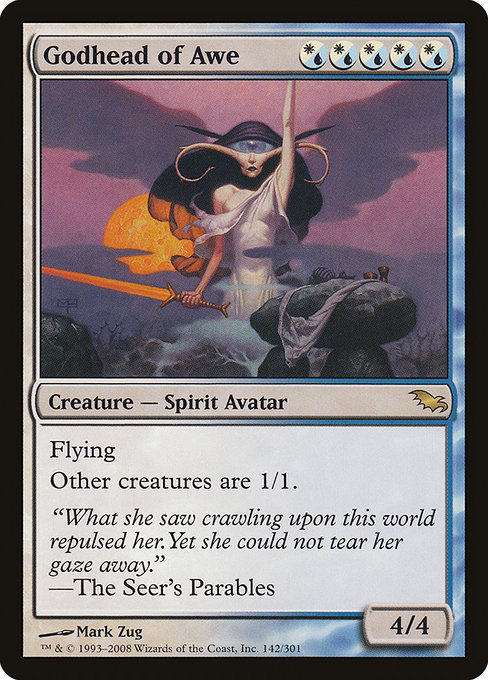
Godhead of Awe ≈ €1.43
ℹ️ Patch: Only the rules text; no creature is created.
All creatures are 1/1, but keep their abilities.
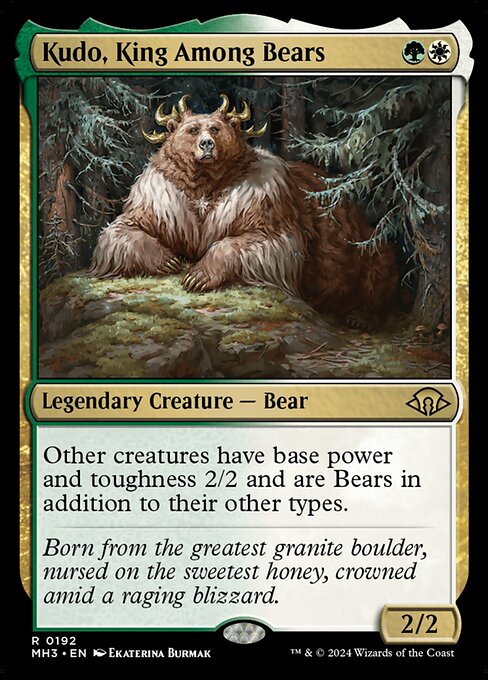
Kudo, King Among Bears ≈ €0.17
ℹ️ Patch: Only the rules text; no creature is created.
All creatures are 2/2 Bears, abilities included.
Rejected — not exciting enough (25)
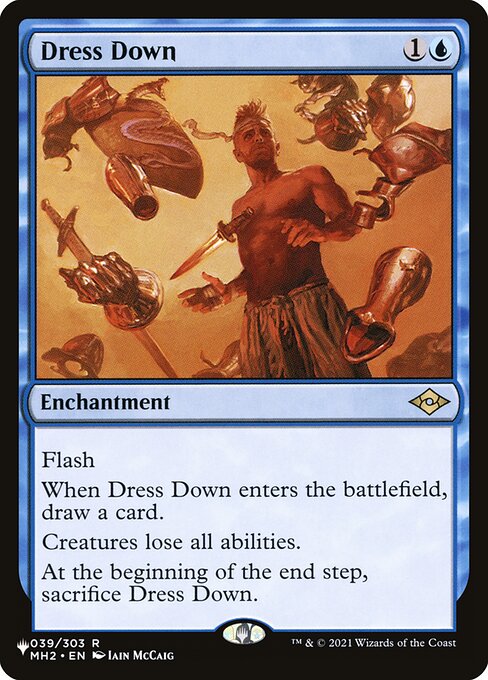
Dress Down ≈ €0.67
ℹ️ Patch: Only "creatures lose all abilities"; no card draw, no sacrifice.
All creatures lose all abilities.
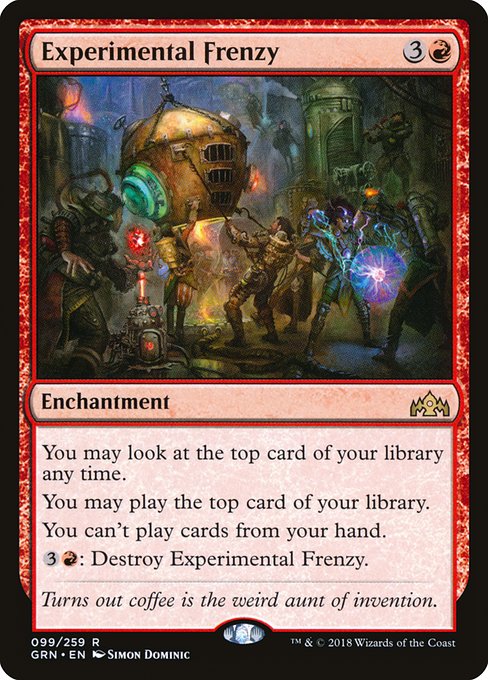
Experimental Frenzy ≈ €0.17
ℹ️ Patch: Ignore the destroy ability.
For one round, everyone plays off the top of their library instead of from hand.
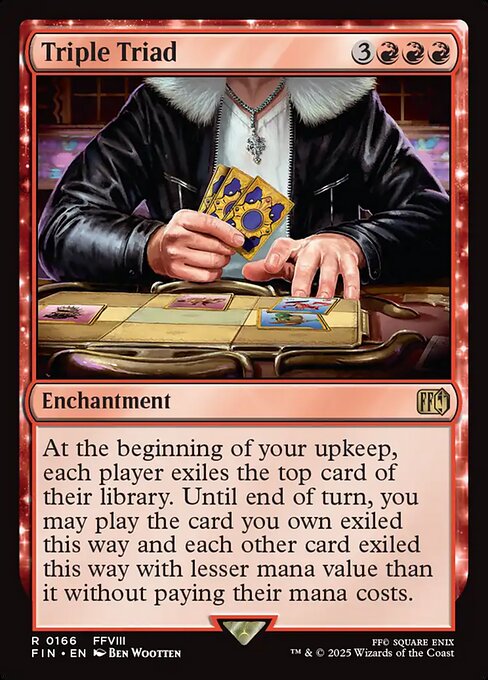
Triple Triad ≈ €0.29
Each upkeep, everyone flips their top card; the upkeep player may play cheaper ones for free. Ruling: too small a pool to be fun.
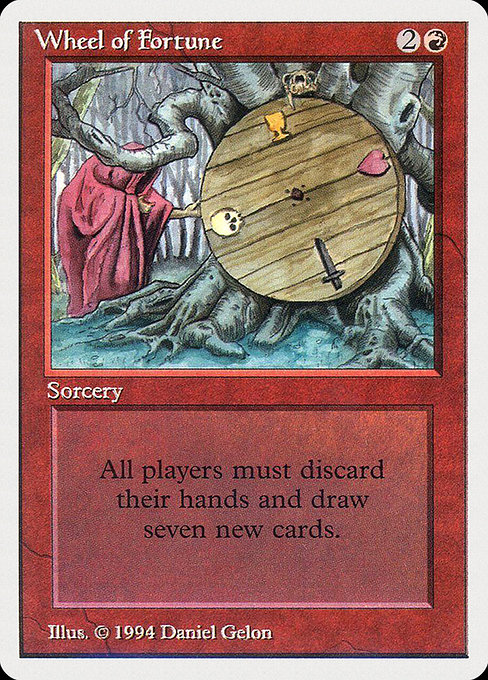
Wheel of Fortune ≈ €133.94
The classic: everyone discards their hand and draws seven.

Reforge the Soul ≈ €3.47
Everyone discards and draws seven.
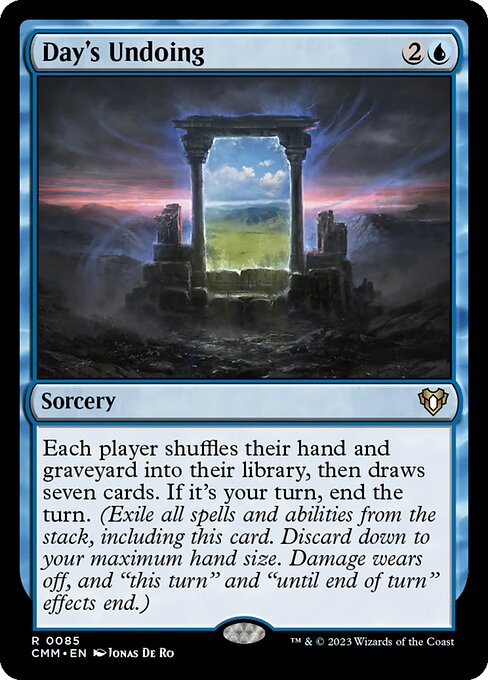
Day's Undoing ≈ €1.46
ℹ️ Patch: Ignore "if it's your turn, end the turn".
Same as Echo of Eons.
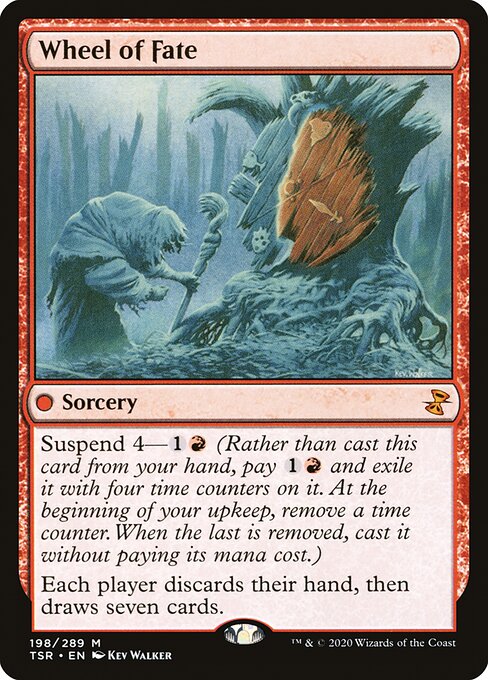
Wheel of Fate ≈ €1.29
ℹ️ Patch: Resolves immediately (ignore suspend).
Another discard-and-draw-seven.
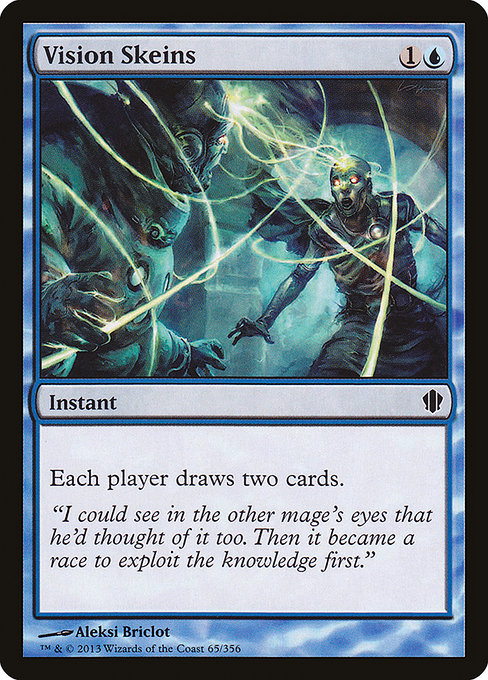
Vision Skeins ≈ €0.24
Everyone draws two.
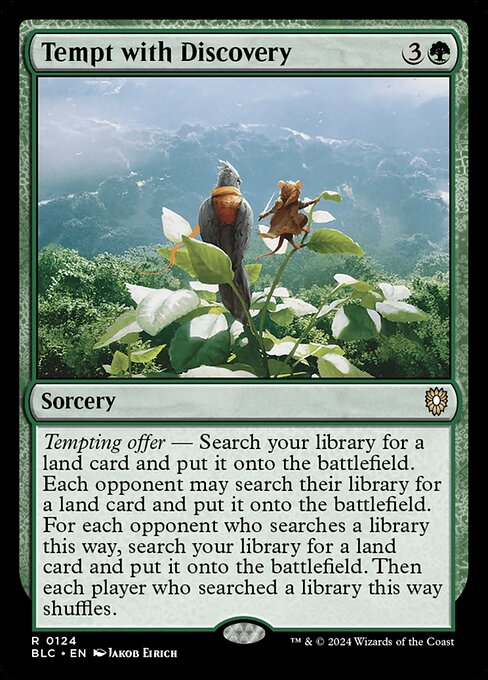
Tempt with Discovery ≈ €1.40
ℹ️ Patch: Each player may search for a land and put it onto the battlefield.
Free land for everyone.
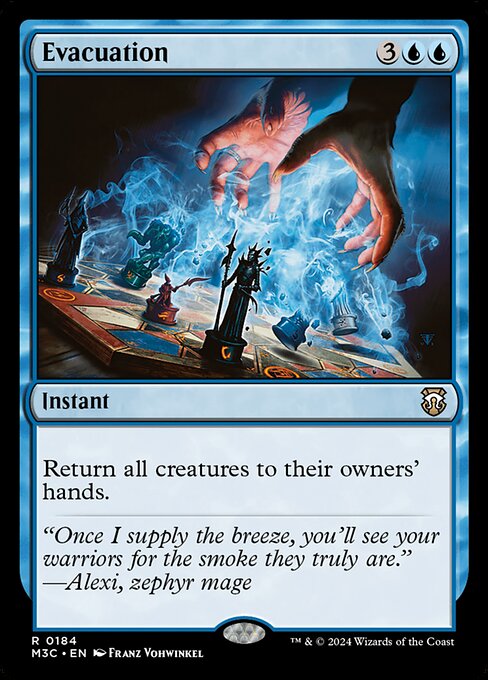
Evacuation ≈ €0.29
All creatures return to their owners' hands.
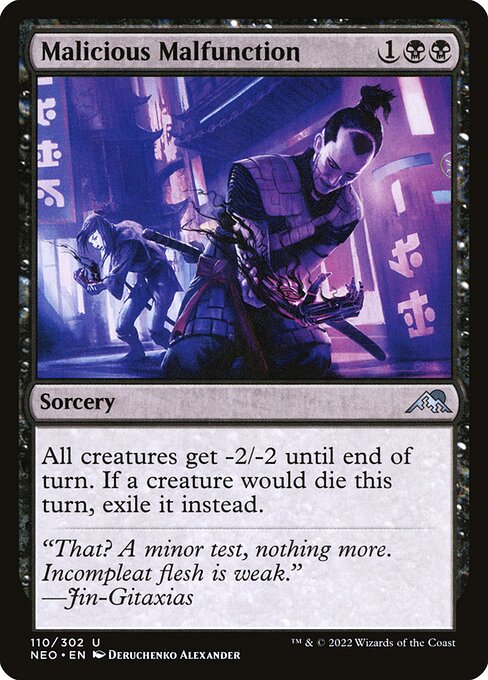
Malicious Malfunction ≈ €0.05
All creatures get -2/-2 and die into exile.

Coercive Portal ≈ €4.39
ℹ️ Patch: The vote happens once, when the Policy is enacted (not each upkeep).
Destroy all nonland permanents, or everyone draws a card.
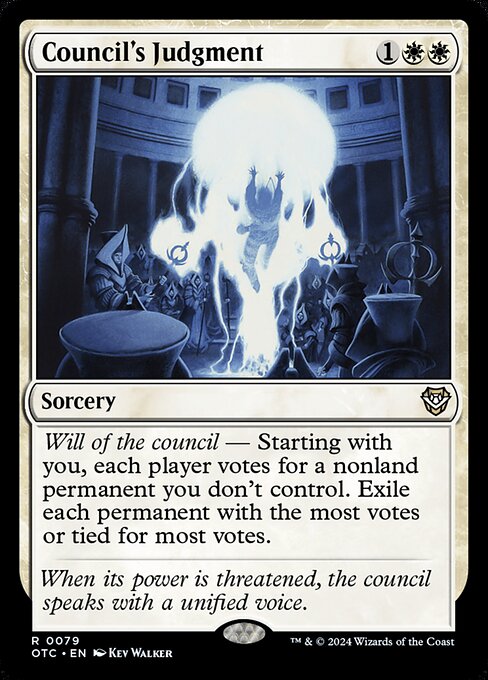
Council's Judgment ≈ €0.46
ℹ️ Patch: Each player votes for a nonland permanent they don't control.
The table exiles the permanent it fears most.
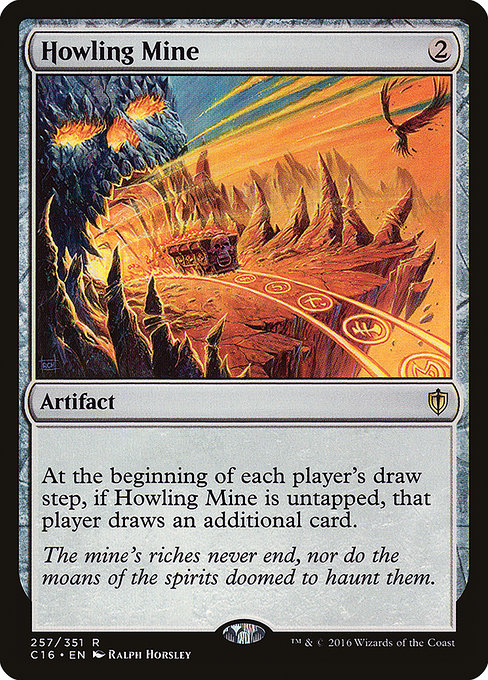
Howling Mine ≈ €1.58
Everyone draws an extra card.
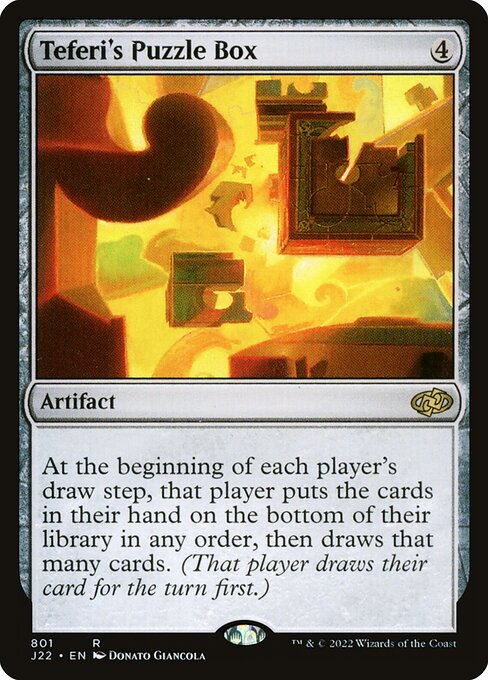
Teferi's Puzzle Box ≈ €5.25
Each draw step, everyone trades their whole hand for new cards.
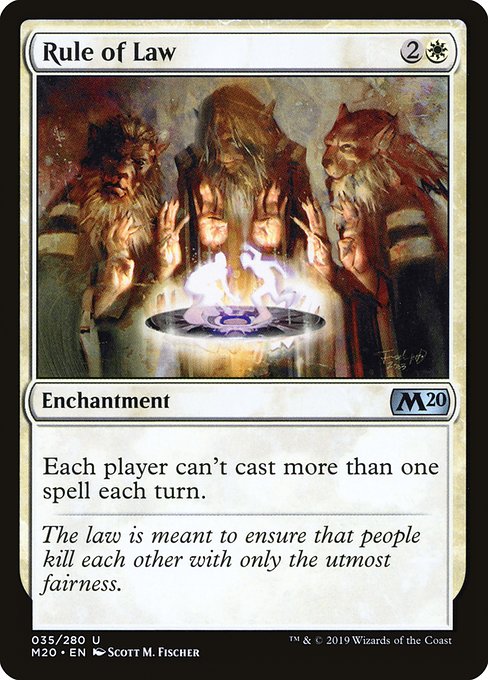
Rule of Law ≈ €0.37
Only one spell per turn. Ruling: just slows the game down.
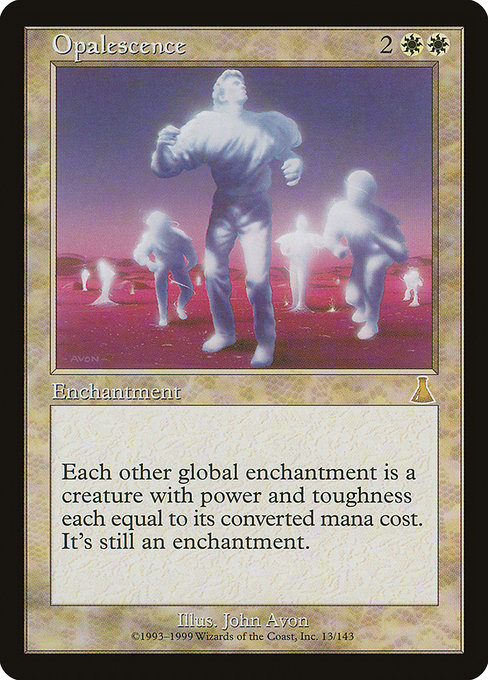
Opalescence ≈ €13.02
ℹ️ Patch: Each non-Aura enchantment (no "other").
Every enchantment becomes a creature.
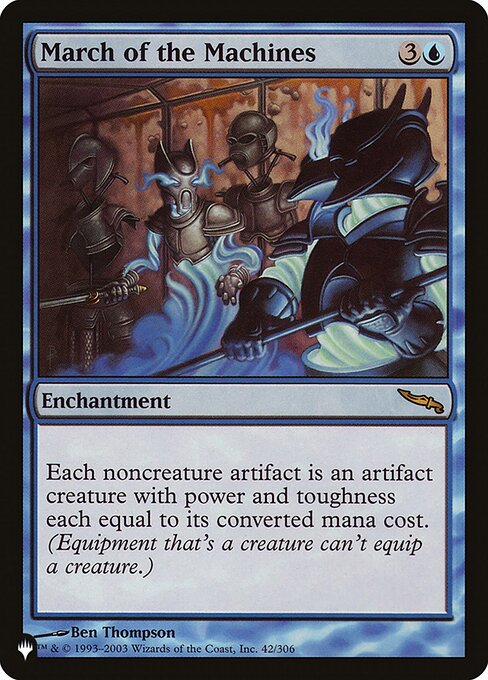
March of the Machines ≈ €0.33
Every artifact becomes a creature.
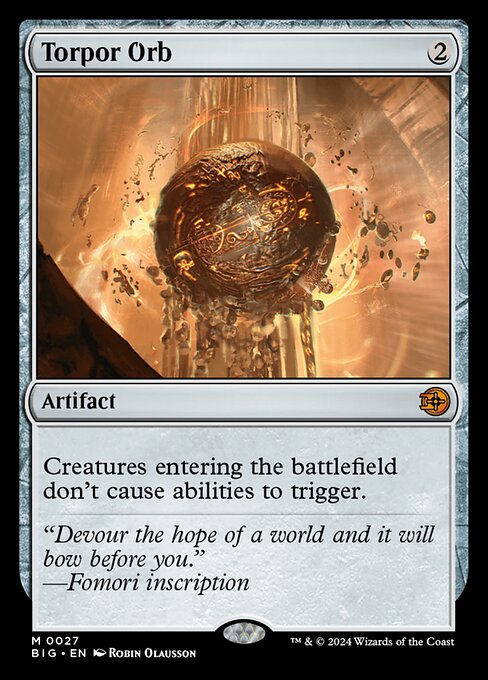
Torpor Orb ≈ €4.51
Creatures entering don't trigger abilities.
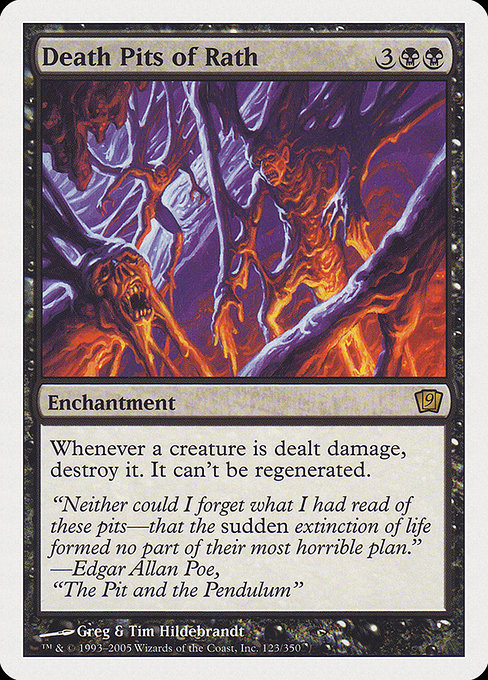
Death Pits of Rath ≈ €0.58
Any creature dealt damage dies.
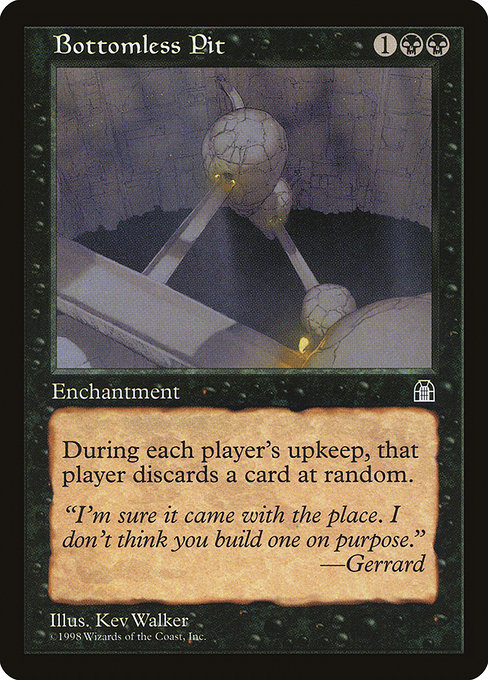
Bottomless Pit ≈ €4.24
Everyone discards a random card each upkeep.
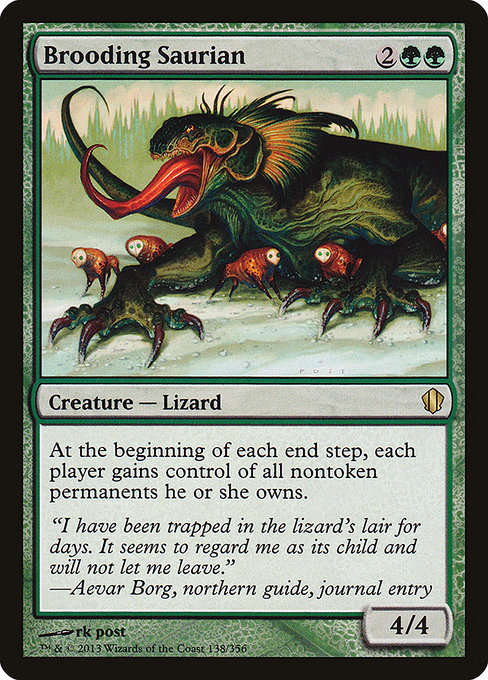
Brooding Saurian ≈ €0.21
At each end step, everyone gets back their stolen permanents.
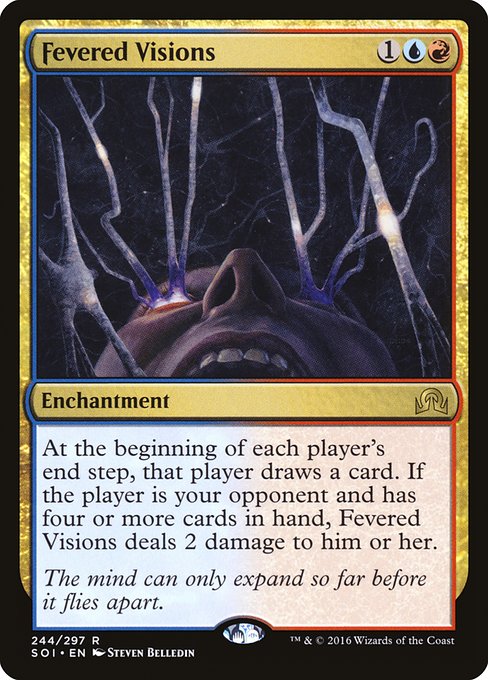
Fevered Visions ≈ €0.75
ℹ️ Patch: Each player draws a card at the beginning of their end step. (No damage part.)
An extra card for everyone.
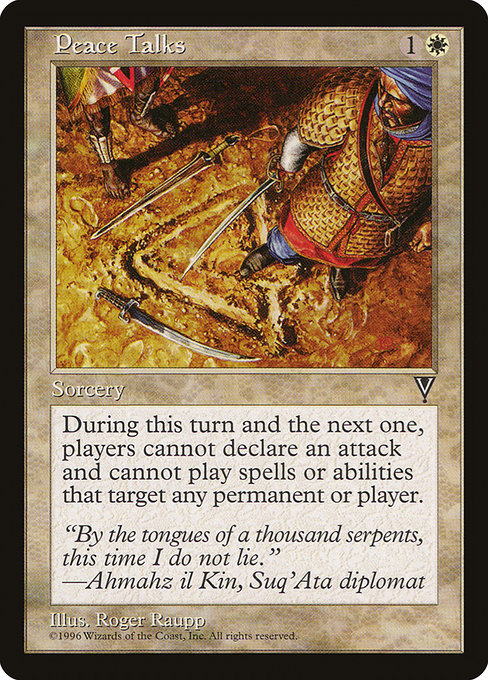
Peace Talks ≈ €0.11
ℹ️ Patch: For this round (instead of "this turn and next turn").
Nobody can attack and nothing can be targeted. Ruling: just slows the game down, nothing interesting on top.
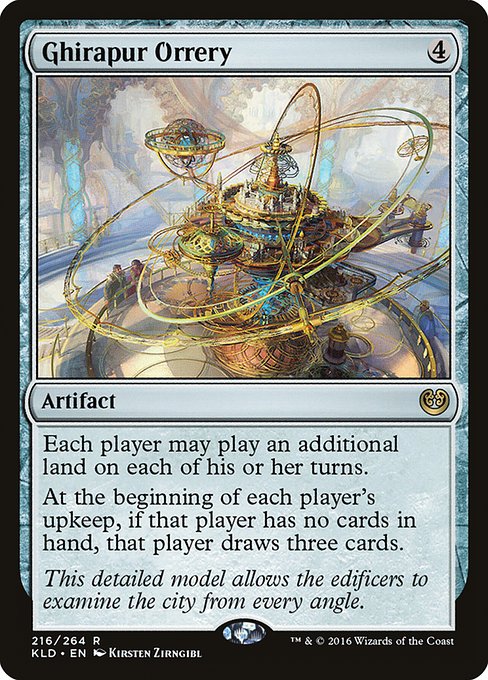
Ghirapur Orrery ≈ €0.28
Everyone may play an extra land, and players with an empty hand draw three each upkeep.
Rejected — doesn't fit the format (19)
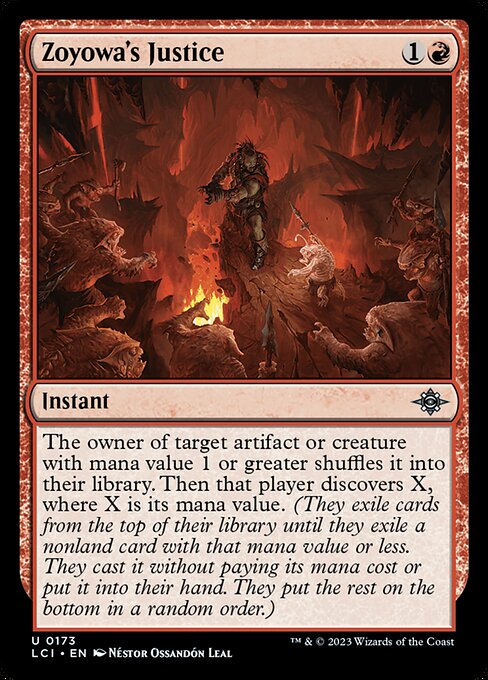
Zoyowa's Justice ≈ €0.18
A permanent is shuffled away and replaced by a random one of the same cost. Ruling: one shared target hurts one player too much; one per player is too much effort.

Court of Grace ≈ €1.15
ℹ️ Patch: The Mayor becomes the monarch.
Brings the monarch into the game. Ruling: hands the Mayor a lasting advantage.
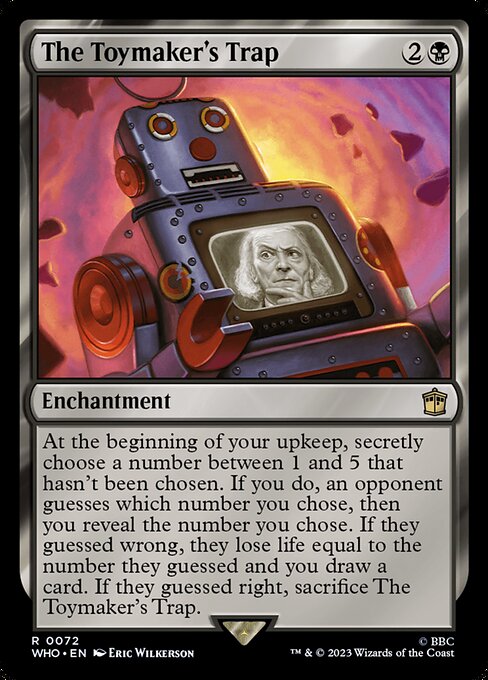
The Toymaker's Trap ≈ €0.18
ℹ️ Patch: The player to your left guesses; nothing is sacrificed.
Each upkeep, your neighbour guesses your secret number. Ruling: a guessing duel every turn that adds little.
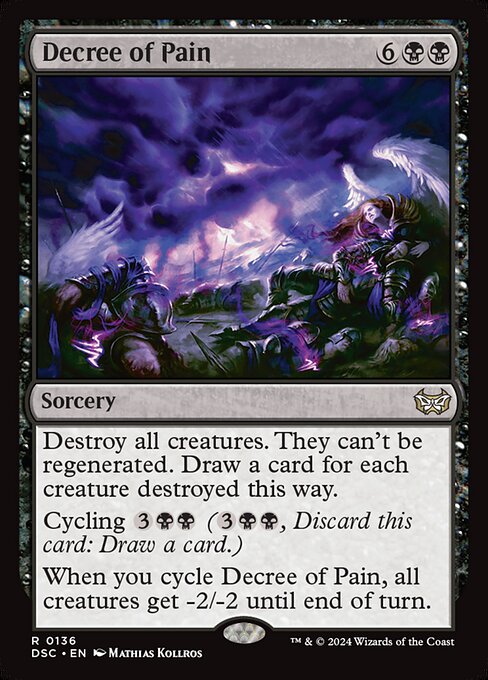
Decree of Pain ≈ €0.24
ℹ️ Patch: Each player draws a card for each of their own creatures destroyed this way. (Cycling doesn't apply.)
A creature wipe with a refill. Ruling: creatures only is too one-sided.
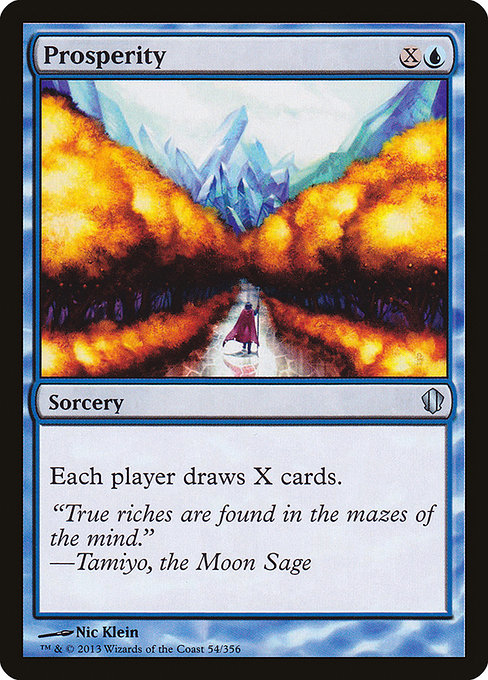
Prosperity ≈ €0.82
ℹ️ Patch: X is 3.
Everyone draws three. Ruling: X spells don't work, since nobody pays for a Policy.
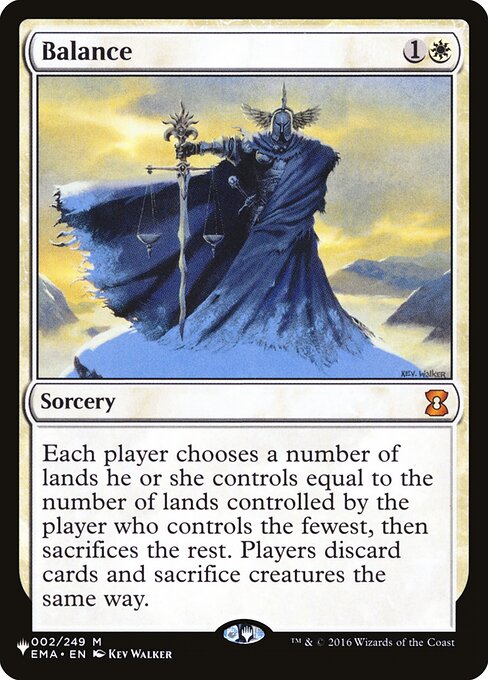
Balance ≈ €0.98
Lands, hands and creatures are cut down to the smallest player's amount. Ruling: too punishing for specific decks.
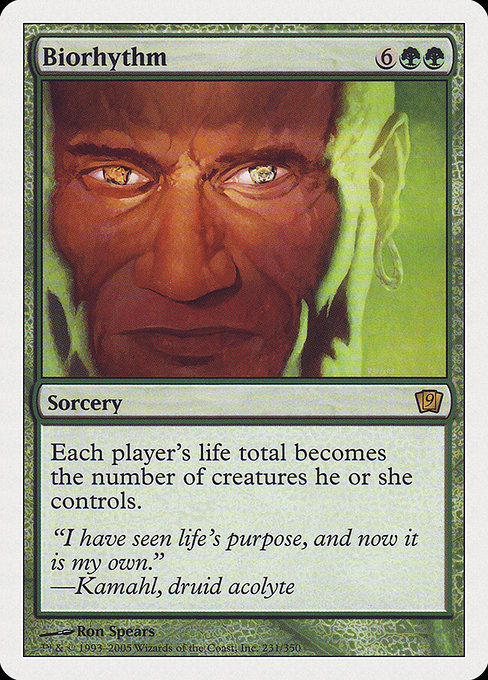
Biorhythm ≈ €13.10
Every life total becomes the number of creatures you control. Ruling: too punishing for specific decks.
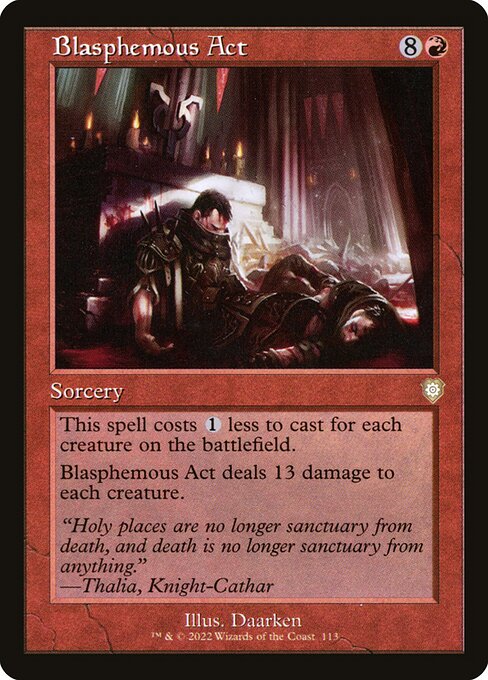
Blasphemous Act ≈ €1.21
Destroys every creature. Ruling: a one-sided wipe, far worse for some decks.
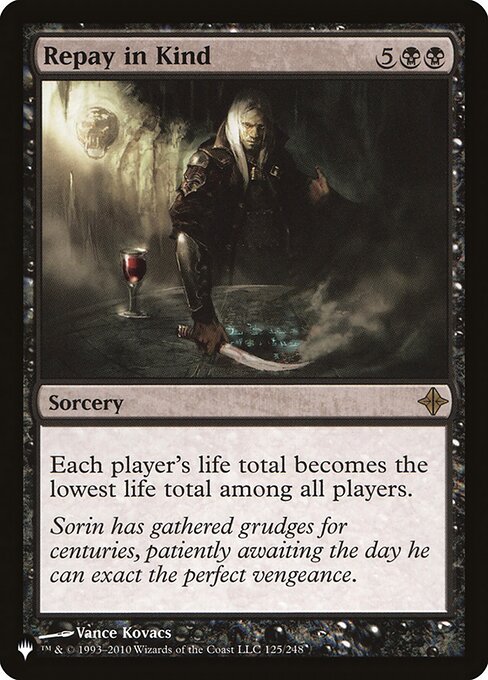
Repay in Kind ≈ €2.75
Every life total becomes the lowest one at the table. Ruling: would never be voted for.
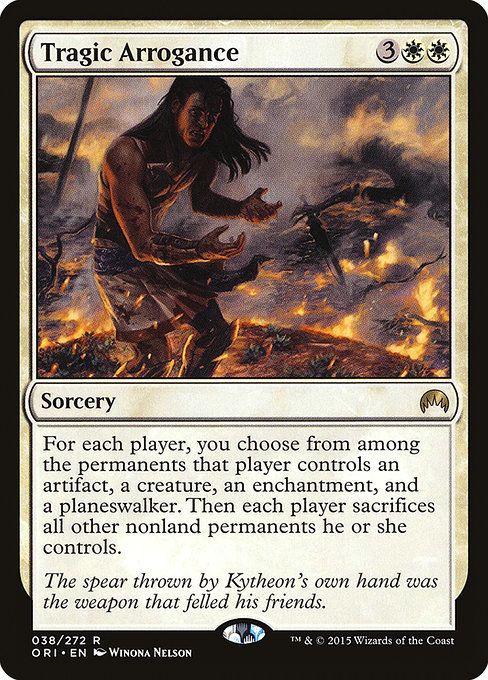
Tragic Arrogance ≈ €0.17
ℹ️ Patch: Each player chooses for the player on their left.
Your neighbour picks which of your permanents survive. Ruling: needs too big a patch.
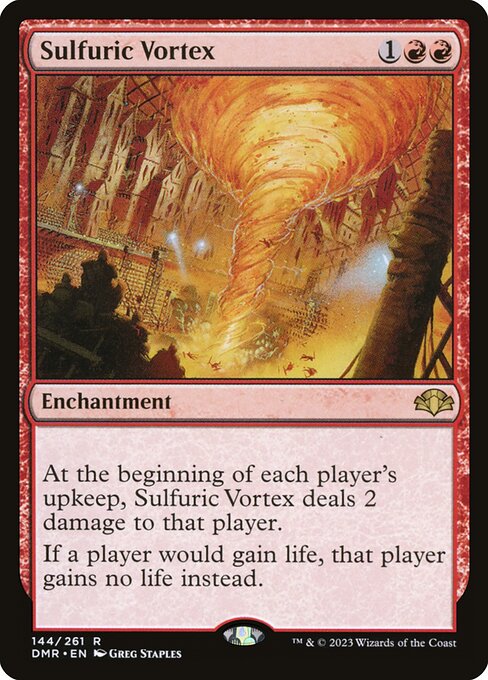
Sulfuric Vortex ≈ €0.92
Everyone takes 2 per upkeep and nobody can gain life. Ruling: fully shuts down some decks.
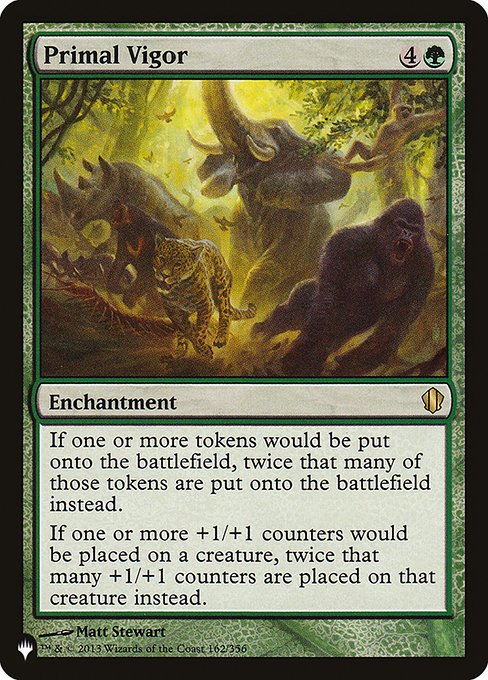
Primal Vigor ≈ €2.87
All tokens and +1/+1 counters are doubled. Ruling: too deck-specific.
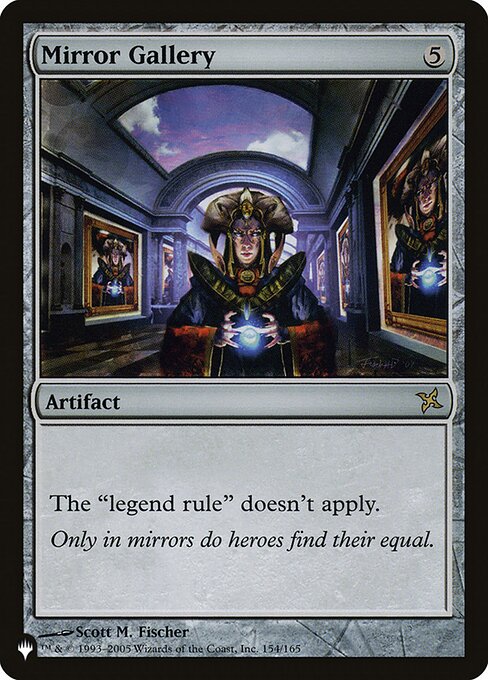
Mirror Gallery ≈ €5.30
The legend rule doesn't apply. Ruling: great as a permanent rule, pointless for one round.
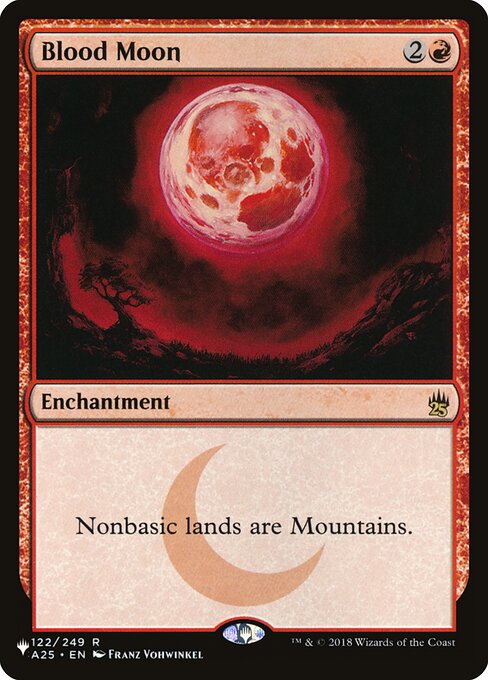
Blood Moon ≈ €5.54
All nonbasic lands are Mountains. Ruling: some decks are completely shut down.
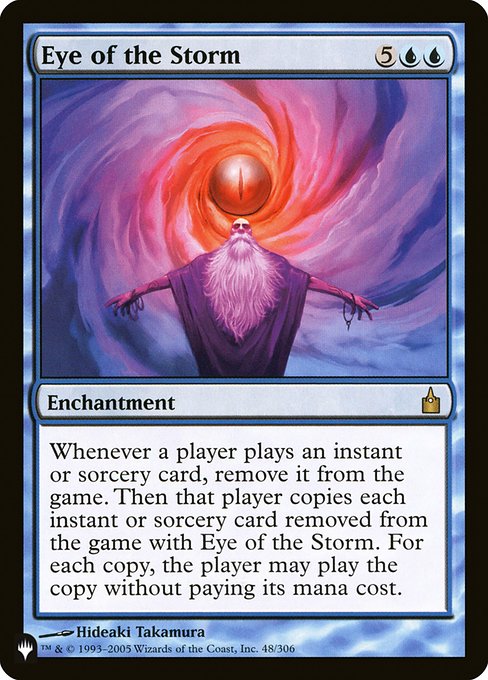
Eye of the Storm ≈ €0.83
Instants and sorceries pile up and everyone gets to cast all of them. Ruling: the last player in the round gets far more effects than the first.
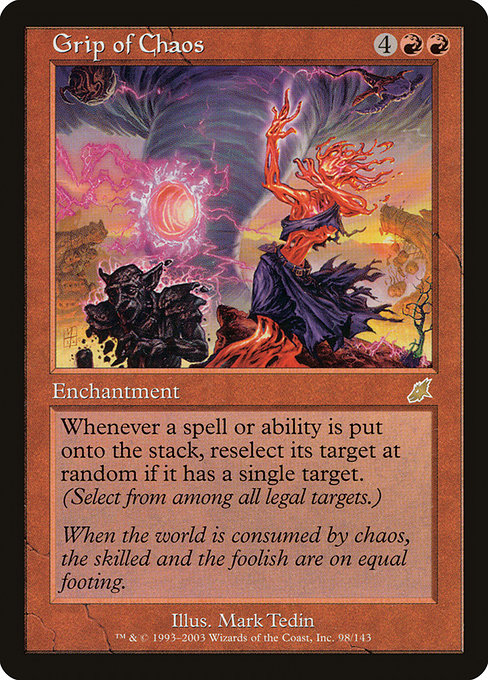
Grip of Chaos ≈ €1.56
Every single target is chosen at random. Ruling: players would just stop casting targeted spells.
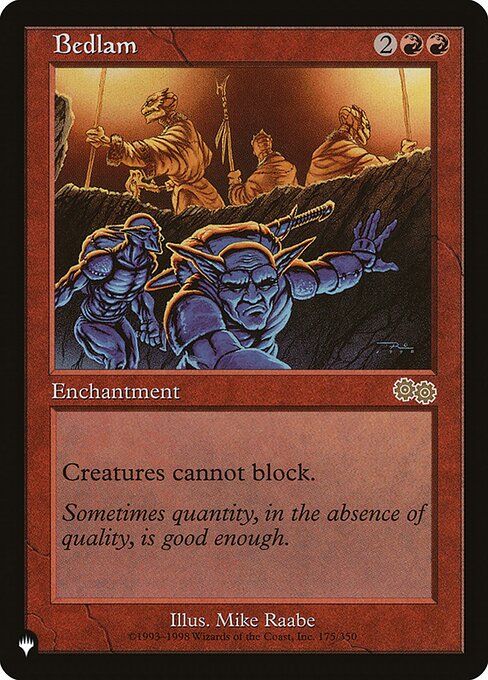
Bedlam ≈ €0.72
Creatures can't block. Ruling: too frustrating for certain decks.
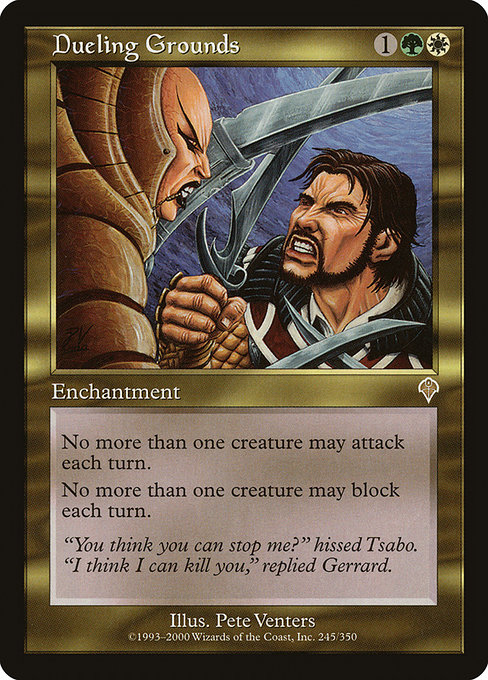
Dueling Grounds ≈ €3.62
Only one creature can attack and only one can block each combat. Ruling: too frustrating for certain decks.
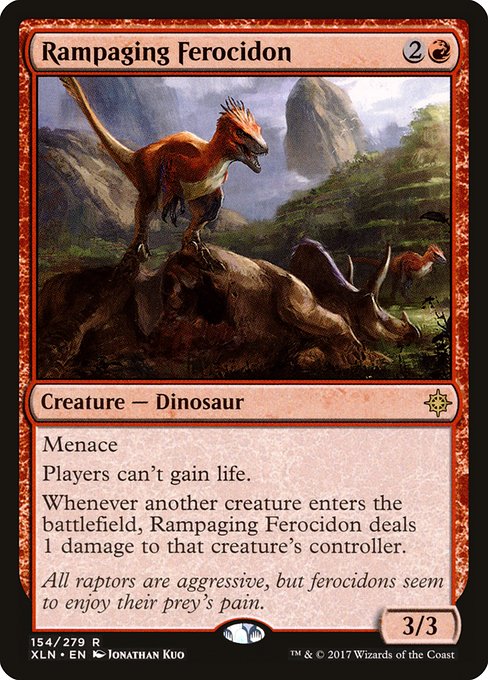
Rampaging Ferocidon ≈ €1.19
ℹ️ Patch: Only the rules text: players can't gain life, and whenever a creature enters, it deals 1 damage to its controller.
Punishes lifegain and token swarms. Ruling: "can't gain life" is too restricting for some decks.
Rejected — too frustrating (4)
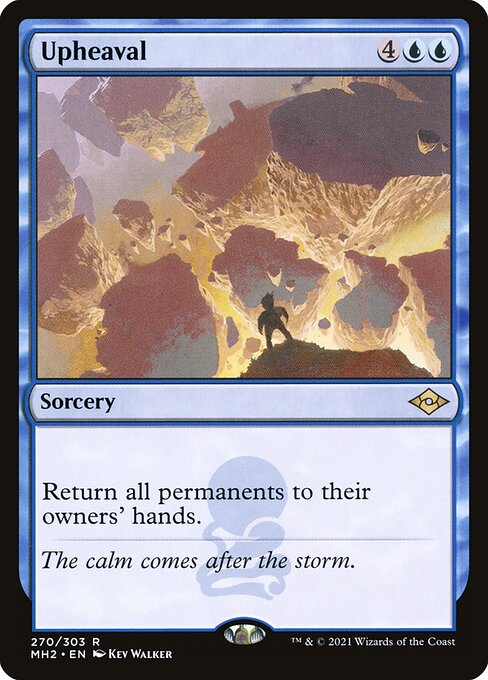
Upheaval ≈ €0.20
Every permanent goes back to its owner's hand. Ruling: just makes the game longer without making it better.
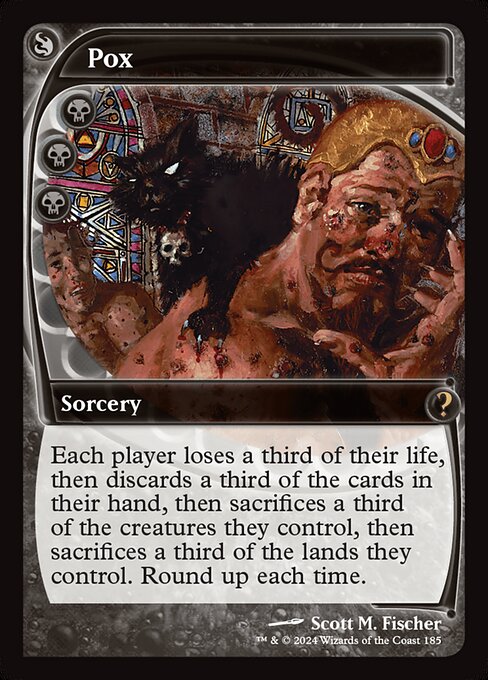
Pox ≈ €1.89
Everyone loses a third of life, hand, creatures and lands. Ruling: without the land sacrifice it would be in (see Fraying Omnipotence).
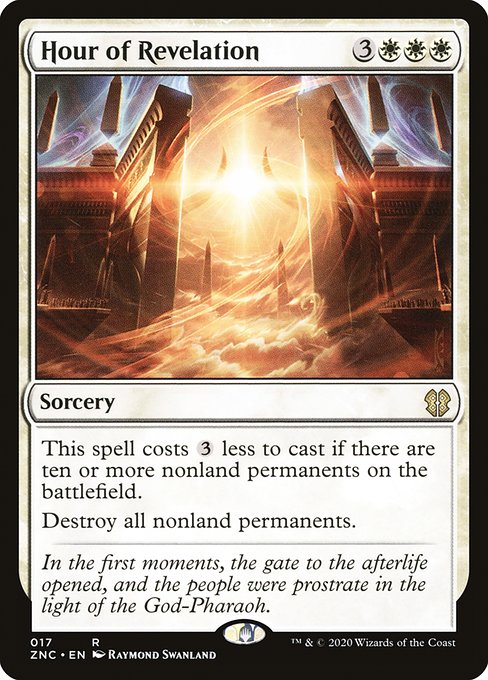
Hour of Revelation ≈ €0.85
Destroys every nonland permanent. Ruling: resets without doing anything cool.
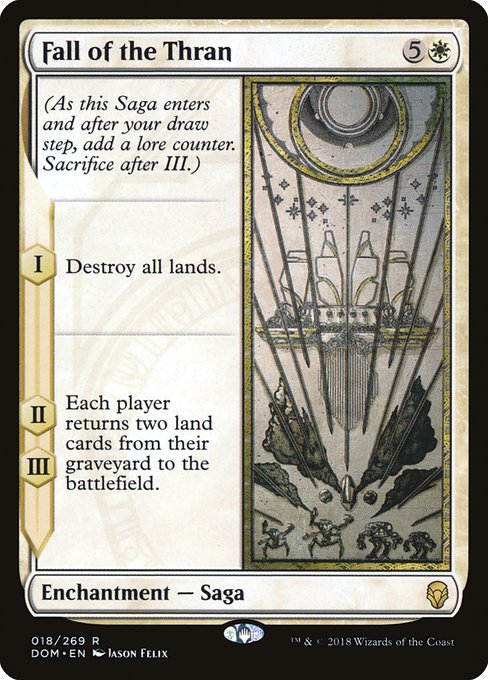
Fall of the Thran ≈ €0.16
ℹ️ Patch: All chapters happen at once: destroy all lands, then each player returns up to four land cards from their graveyard.
A land reset. Ruling: land destruction is an anti-pattern unless it comes with something really fun.
Prices: Cardmarket trend via Scryfall, cheapest printing, without shipping.